Having received my kit from the headquarters of National Novel Writing Month, I’ve been thinking about our group’s plans for when the contest starts in November. I also need to do some work on Hotchpotch, my open-mike for writers.
As such, I’ve had no time to write a full entry. However, we should be back next week with something to say.
Unfortunately, there hasn’t been much time to construct a full entry this week. I’ve therefore rounded up two main points, ahead of a full entry next week.
Don’t forget to save your work as you write it, and back it up once you’ve finished. I was reminded of this point when I lost last week’s entry by accidentally hitting the Move to Trash button in WordPress. The entry should still be recoverable, like your computer’s Recycle Bin, but it was missing.
Fortunately, I’d handwritten the first draft, so I was able to reconstruct it. I later reported the incident to WordPress and it was found to be a bug when using the Block Editor.
As alluded to in previous entries, we’ve had trouble finding an open-mike venue after our last one closed. However, we had a successful meeting yesterevening, and we now have the same stopgap venue again for August. A few of us are meeting on Friday to discuss the long-term future, plus a potential collaboration with an Edinburgh-based group.
Further to last week’s entry about our Hotchpotch venue, I’m pleased to report we’ve at least found a stopgap venue for July. I was out of Dundee at the time, so a big thanks go to our core group of regulars for helping me to take swift action.
As we look to August, we need to find somewhere that’s quiet enough to hear unaccompanied speech and that can host the group in the long term. Our old venue allowed us to use the basement every month on a Monday as it pulled in customers on what is traditionally a quiet day in the licensed trade.
The other consideration is whether to start charging members. Until now, entry has been free because our venues have let us have the space in exchange for buying food and drink. We attract around 30 people, sometimes more, per event and a charge of – say – £2 apiece would cover a £50 hire charge.
Whatever happens, I’m keen to make sure the evening sticks to the same principles: to give people a platform for their work with no judgement and no criticism.
I often speak about Hotchpotch on this blog. This is an open-mike night I run, with an ethos of no judgement and no criticism.
Yesterday, we heard that the venue we use is closing down, so we currently have nowhere to hold our next session, scheduled for Monday 15 July.
A few of the regulars are working on a stopgap venue, and we hope a permanent place can be found for August. We’ve also sent a message to members, advising them of the situation and asking for help.
So I’m afraid this entry has not much style nor substance, as this conundrum will be taking up much of my time this week.
Nonetheless, we’ve endured a number of venue closures over our ten-year history, and we’ve bounced back every time.
EDIT: In the time since this entry was written, we’ve found a stopgap place. This will give us breathing time before August.
Over the years, I’ve been to poetry gigs in many different locations.
In most cases, there are only a few legal requirements, including the correct insurance, a PPL licence if music is involved, and an alcohol certificate if drink is served.
For this reason, pubs and cafés are a common choice, and many bookshops, theatres and libraries are able to help. And there are plenty of alternatives. A friend launched her novel in a bank, while my own Hotchpotch event has previously taken place on an ancient warship.
And now I have somewhere new to add to the list: a virtual reality studio. On Saturday, Second Space took over the place for one night only.
This studio is largely open-plan to allow two or more players to battle against each other wearing VR helmets. As a result, there’s an area large enough to seat 50 people comfortably.
The other unusual factor in this gig was the extent of technology involved. Each poet was accompanied by computer-generated fractal imagery such as you might find at a nightclub, plus short films screened between performers.
Even before I knew about this, I’d discussed with one of the owners the possibility of holding a special Hotchpotch there, as we’ll celebrate our 10th birthday in March 2020. From seeing how well the Second Space performance was staged, I’ll start making plans now and we’ll be all set for next year.
Regular readers will know that I run a monthly open-mike night called Hotchpotch; it’s for writers rather than musicians. This past weekend, we branched out and held two extra events that differ from our usual format.
On Friday, it was Hotchpotch Presents…, a 40-minute showcase of some of our regular members’ best work with no open-mike element. This was part of a festival called Stripped, organised by Dundee Rep Theatre. Our set finished off a cabaret-style evening that included the poet Imogen Stirling.
The staff there treated us well, even when we changed our technical requirements a couple of hours beforehand. I did feel the audience needed to be loosened up a little, but they had done by the halfway point. The best part was that we had a small budget, so the performers could be paid a fee.
This will certainly open the door for another members’ show in the future, possibly next March when Hotchpotch celebrates its 10th birthday.
On Sunday, we held Hotchpotch in Perth, around half an hour away by car. This was part of the Soutar Festival of Words, and we were given the use of the AK Bell library for 90 minutes. That event was modelled on the Dundee open-mike sessions, but performers were to be given five minutes rather than seven, and we allowed them to sign up in advance.
Although the audience was around half the size of what we would normally attract, it meant that everyone was allowed a second turn at the microphone if they wanted it. Among the crowd was Rana Marathon, who holds a regular spoken-word night in Perth called Blend In – Stand Out (BISO). Unfortunately, I didn’t manage to go to the BISO Slam the previous day because I was organising our event.
And there’s more to come. I’m currently in Wolverhampton on business where there’s an event tonight called PASTA, short for Poets and Storytellers Assemble. It seems to be similar to Hotchpotch, so I’m looking forward to taking part.
Last week, I learnt that the venue we use for Hotchpotch – the spoken-word open-mike night – will be closed for refurbishment until the end of August or the beginning of September.
By Texas State Archives from Austin, Texas, USA (2001078_009_70_132_002ac) [No restrictions], via Wikimedia CommonsYou might remember three weeks ago, I spoke about the importance of keeping a kind of Cabinet office when there are difficult decisions to be made. The system definitely worked in this instance, with regular members making good suggestions about what to do next.
Within 24 hours, we’d managed to secure another bar in the city centre for this month, and potentially next. We even had an offer from another venue that we can investigate if we need to. The next Hotchpotch will now take place in the Westport Bar in Dundee on Monday 16 July at 7pm.
My normal method of writing blogs is to pick one subject and write a few paragraphs about it. However, nothing major has happened over the last week so no single topic could be extended to a full entry. Instead, here’s a round-up of what’s been occurring.
At the end of last month, I spoke about the open-mike night I run for writers and that we’d found a new venue. I’m pleased to report we had a marvellous time, with a record 17 people reading stories and poetry, and many more eager ears in the audience. It would be great to see this sustained over the coming months.
Last week, I mentioned I was redrafting a one-woman play I originally wrote for my Masters dissertation. Since then, I’ve boosted the word count to 11,000 and it now lasts for an hour, even delivered at a reasonably fast pace. This means it can be stripped back if necessary.
In the same entry, I mentioned I was redrafting a short story. I haven’t had a chance to send this away yet, but I will soon. I have an annual target to submit 53 pieces to publishers – an average of one a week, plus one for good measure – and I’m nowhere near on par.
Yesterday, a friend reposted a short piece called Humans Are Adorable, written from the point of view of an alien looking at the human race. Number 12 is about reaching the moon, described as humanity having ‘made it to the end of their yard’. A mutual friend then quipped, ‘Thank [goodness] I don’t have to mow it.’ And this image stayed with me, so I simply had to make it into a poem:
Last week, I made a fool of myself in front of 150 e-mail recipients. I was sending out details of the next meeting of Hotchpotch, an open-mike night for writers. I normally update the previous e-mail with the latest details, but I’d forgotten to change the subject line. I therefore followed it up with a correction.
The most annoying part of this affair is that I use a Gmail extension to cancel the sending of an e-mail as long as I hit Undo within 30 seconds. However, it has encouraged me to become more vigilant with future updates. Aside from this incident, here are some of the lessons I’ve learned when communicating with writing group members.
E-mail
It’s important to exercise privacy when using e-mail. The addresses of the recipients should be typed in the Bcc box, not To or Cc, so each member will only see their own address on receipt. It’s worthwhile including your own e-mail address on the distribution list to check whether it’s formatted in the same way you intended.
Recipients should also be given the option to unsubscribe from updates. Whenever a Hotchpotch e-mail is sent, there is a signature at the bottom telling people to let us know if they want to unsubscribe.
The other mailing list I maintain is for the Dundee & Angus region of National Novel Writing Month (NaNoWriMo). This is done differently, as e-mails are composed using their website and the Unsubscribe function is added automatically before the message enters members’ inboxes.
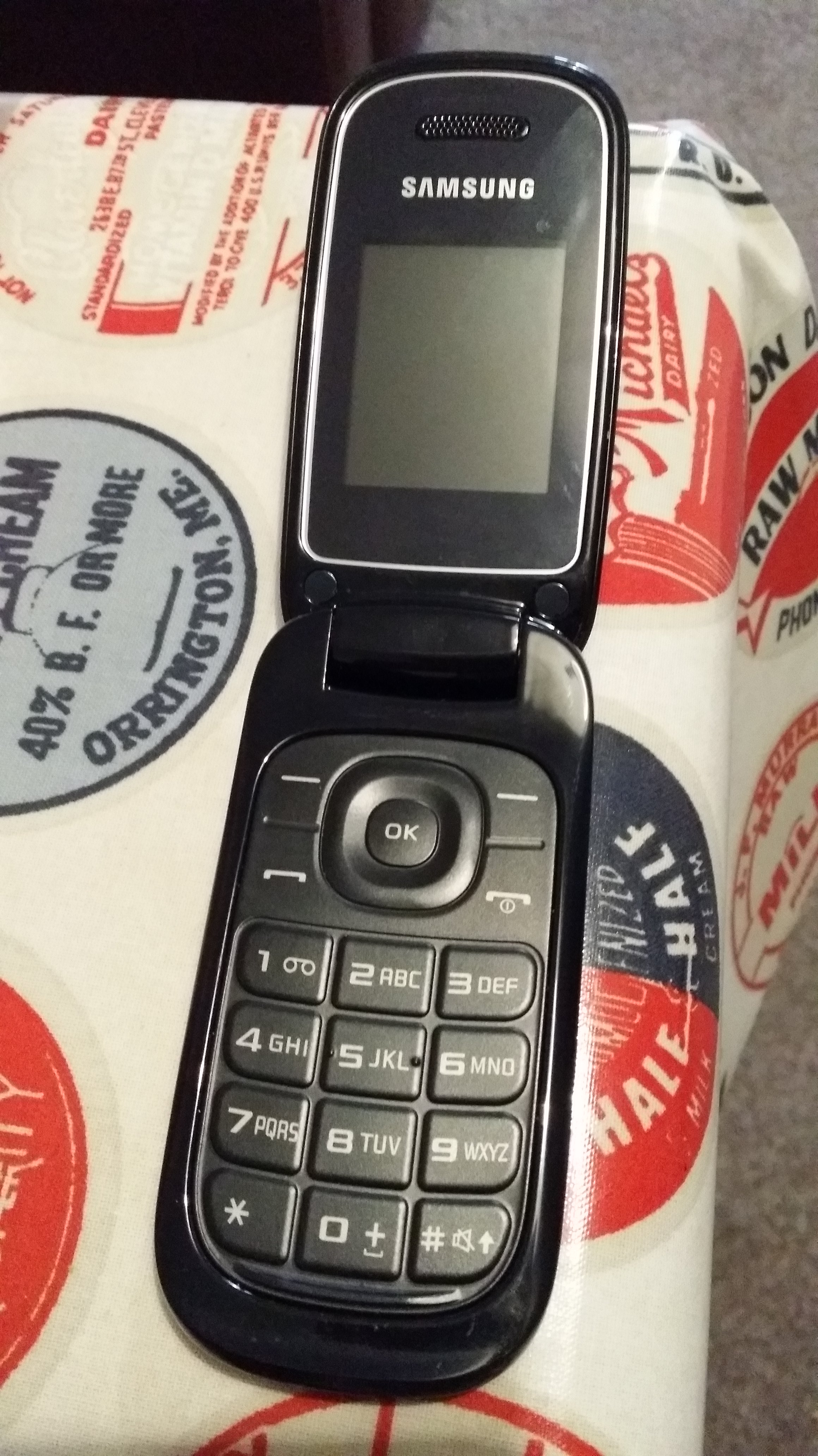
This is my NaNoWriMo phone
Facebook
Whenever Hotchpotch and NaNoWriMo e-mails are sent, their respective Facebook pages are updated at the same time with the same information to reach as many people as possible. The Hotchpotch page is open to the public since anyone can come along, whereas the NaNoWriMo page has its access restricted to members only.
One great advantage of the Facebook page for Hotchpotch is that we can tag and promote other events, which notifies that page owner, who can then share our event with their audience. I also share our updates on two other arts pages.
Other methods
Hotchpotch has an active Twitter account. Whenever an e-mail is sent, the date and time are given, followed by a link to the Facebook post. Our updates are occasionally shared by others, while prospective attendees can ask us questions.
Although NaNoWriMo itself has a Twitter presence, our region does not; again, this is because our bulletins are open only to members. However, I do carry a cheap phone with a budget SIM card if our members need to speak to us urgently. In practice, the only time I’ve needed it so far is when the battery on my own phone ran flat.
Frequency of updates
It’s a good idea not to fill people’s inboxes with the same message every day. In my experience, people who are overloaded will permanently unsubscribe or unfollow. It’s different, of course, if the recipient has signed up a daily writing prompt or suchlike.
For NaNoWriMo, once a week is the usual pattern, reflecting our weekly meetings. The next monthly Hotchpotch meeting is usually announced a few days after the previous one, with a reminder around two weeks later. And next time I send one, I’ll be double-checking that subject line.
Tonight I’m hosting a spoken-word evening called Hotchpotch. This is an informal monthly event where writers and poets can read out their own work without judgement or criticism. In recent months, we’ve seen many new faces, a trend we would like to maintain.
To keep our events at the forefront of people’s minds, I’ve made it a priority to communicate with members regularly, also to cross-promote other literary events and the venues we use. I send a bulletin every couple of weeks on Facebook and Twitter, and by e-mail.
The last time, though, there were some problems with the reminders, and it was up to me to fix them.
Facebook
A lot of our regulars subscribe to the Hotchpotch Facebook page. This is the easiest update to make: it can be done on a PC or a phone, subscribers are notified immediately when a new post appears, and there’s a facility to tag the pages of related literary groups. The posts can also be edited, and people can ask questions in the comments.
On Facebook pages, administrators have the option to post under their own name or to post under the name of the page. The last time, I forgot to change the option and posted as myself. People could still see the message if they happened to look at the page, but they wouldn’t be individually notified.
The post had been up for a few hours before I noticed. Fortunately, all I had to do was copy it, make sure the related events were correctly tagged, and repost it in the correct mode.
Teh interwebz. (Photo credit: Wikipedia)
Twitter
After posting on Facebook, I send out the link on Twitter using HootSuite software. This can calculate the times of day that people are most likely to see your updates; in our case, it typically posts at 9am the following day.
Shortly after I’d corrected the Facebook error discussed above, I saw our Twitter post had a spacing error which meant the venue wasn’t properly credited. To add to the problem, the message had already been retweeted by two followers and later a third. One of these is the Scottish Poetry Library, which has an extensive audience and is great exposure for us.
The question was how to correct this error in the least disruptive manner. I didn’t want to leave the post as it was because it looked unprofessional, yet I didn’t want to take it down because users had already engaged with us. I’ve learnt a few things from managing literary groups, and one of them is to admit when you’ve made a mistake.
I posted a corrected version with the venue properly credited. I then sent private messages to the three users explaining what had happened and asking whether they would do me a favour and retweet the correct version. And they did. This move ended up working in our favour, as more Library followers engaged with our new message than the original.
E-mail
A significant proportion of our members don’t use Facebook or Twitter, so we also maintain a mailing list.
The bulletin I’m most worried about is this one; once an e-mail has been sent, it’s not usually possible to recall or amend it. So when I send Hotchpotch updates, I’ve set up a 30-second delay so it can be cancelled if necessary before it leaves my outbox. Gmail users can find this feature in the Settings.
But despite the problems with the Facebook and Twitter pages, the e-mail was sent without any mistakes.

![By Texas State Archives from Austin, Texas, USA (2001078_009_70_132_002ac) [No restrictions], via Wikimedia Commons](https://upload.wikimedia.org/wikipedia/commons/thumb/1/1c/2001078_009_70_132_002ac_%2820333788303%29.jpg/573px-2001078_009_70_132_002ac_%2820333788303%29.jpg)


 Gavin Cameron