Making an Event Flexible Without Losing the Audience

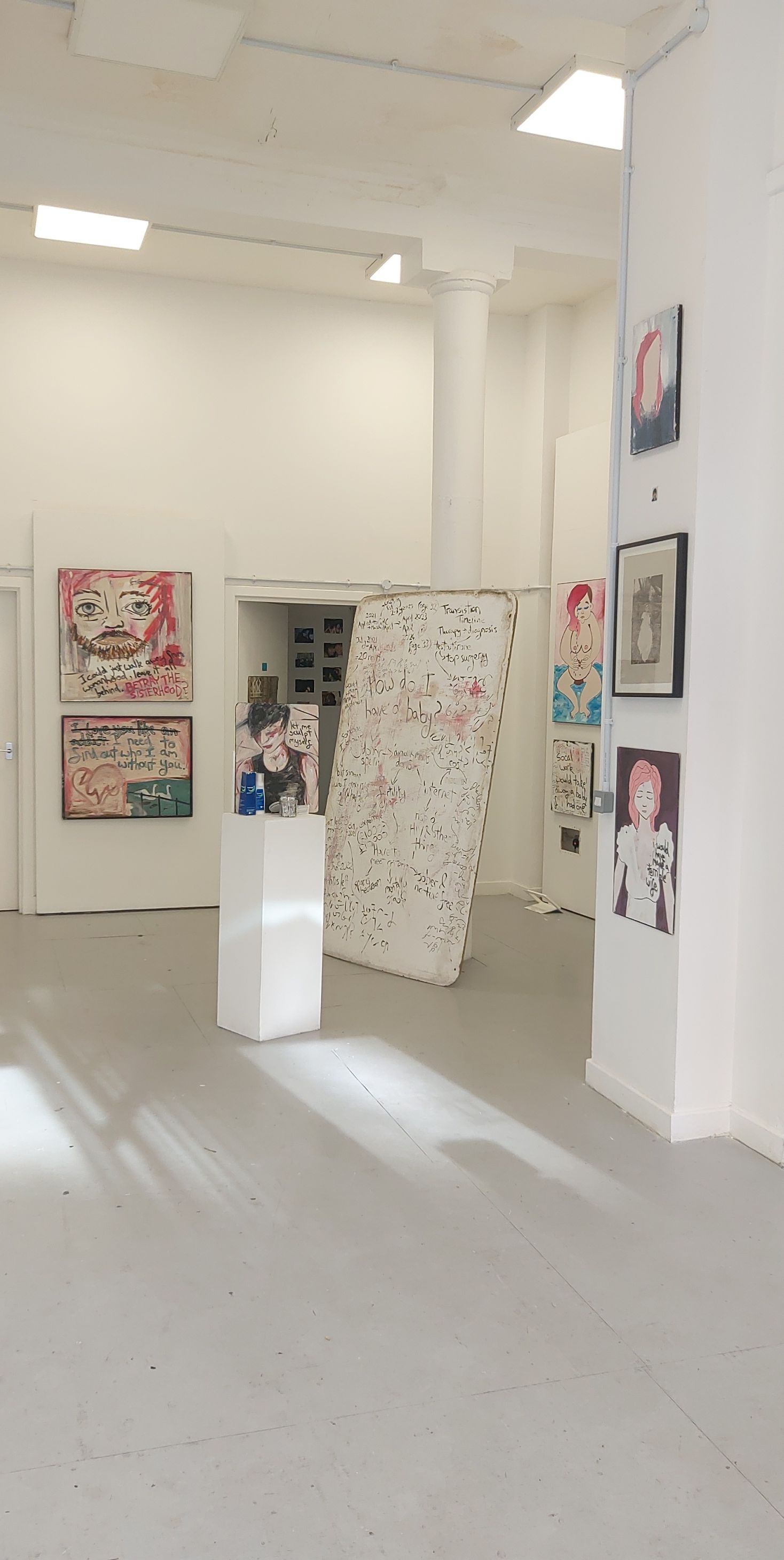
On Saturday just gone, my open-mic event Hotchpotch collaborated with I Am Loud Productions from Edinburgh.

After an open-mike segment, the three headline acts would give us their best work. With close co-operation from the venue, it was a marvellous night, and showcased the best of both organisations.

However, I did admit to I Am Loud that I was initially in two minds about whether to allow them to take over our event.

To understand my thinking, let me take you back to February this year. I received a message from a reasonably high-profile poet from the other coast of Scotland. She was putting together a book tour and wanted to include our event as place to promote it.

I was flattered she’d heard about us and thought about us, as I’d been to see her show in 2019. I realised immediately, however, this tour would not be a good fit for us. Our open-mic shows are about audience participation, with no one person featured more highly than another.

We exchanged a few e-mails and I proposed a solution of starting the book launch at 6pm, then beginning the open-mic at 7pm as usual. I would also have been prepared to host a special event separately from the open-mic. Our talks ultimately came to a halt, but I did recommend she approach another group I know, and I hear she’s going to be a headliner there soon.

So when I Am Loud wanted to collaborate, I was convinced to give the green light when I heard the open-mic element would be part of the show. This would be in a much-reduced form, with just eight slots of three minutes apiece, compared to unlimited slots of seven minutes.

In practice, though, there was a smaller audience than usual, perhaps because the regular crowd are accustomed to Wednesday events rather than those on Saturday. As such, only five of the eight slots were taken, so nobody was left disappointed.

Catching Up With My Correspondence

Last week, I ended up writing about some major changes to a distribution list I run, but I promised to make this week’s entry about writing to a penpal from North Wales. Since last week, I’ve heard my most recent reply arrived safely, despite intermittent postal strikes.

This has also caused me to forget much of what I’ve written. While I meant to make a special point of keeping a copy – as my pal does – I forgot and just posted it without thinking. It’s a small risk, but one of our letters went missing in transit. The more immediate problem with not keeping a copy is that I sometimes have to infer from the response what we were talking about before.

However, we have developed a tradition of asking each other a few questions out of curiosity, in the vein of ‘What friend do you know best?’ or ‘What have you done now that you never would have done ten years ago?’

On to the actual writing, I’m particular about my paper. I keep an A5 notebook with the pages perforated at the spine, so they tear out neatly and fit into a C5 envelope. I admire my pal for being able to write on unlined paper. If I did that, I guarantee the lines would start sloping downwards towards the edge of the page.

Having written so many letters and using that paper so often, I tend to have a rough idea of its length before I write it. Occasionally, it’s shorter than expected, but it sometimes encroach onto eight pages.

And I do write to others as well. The next scheduled letter will be with a Christmas card to my pal in the Republic of Ireland. I don’t exactly go bonkers for Christmas, but this is something we’ve done since the early 2000s, along with birthday cards. If anything, our messages have become longer over this time rather than shorter.

But it’s not a hobby for impatient people. It can take weeks for a reply, and I always have to post early to the Republic of Ireland to help those cards arrive in time.

Refreshing the Roster of Raconteurs

I have a penpal in Wales who wrote to me last week. We’ve been in touch for nearly two decades online, and this has gradually moved into long paper letters. If you’d asked me last week what my blog was going to be about, that would have been the topic.

But I’ll come back to that next week because I finally carried out an overdue task on Sunday.

Regular readers will know I run an open-mike night called Hotchpotch. When I took over in 2015, I inherited the passwords for the Twitter account, the Facebook page and the e-mail bulletin list. In the case of the first two, users can self-manage their subscriptions, but the bulletins require manual intervention.

Additionally, some people on the list had moved away or not come along for years, but had never requested to unsubscribe. And recently, the server that hosts our domain name had been failing to deliver to otherwise valid addresses, which then needed to be re-sent in their own separate list.

On Sunday, I wrote to everyone on the list individually, explaining we were transitioning to an Announcements list on Dreamhost. This requires people to click a link to opt-in, and it’s much easier to remove members.

At the time of writing, the new list has 34 subscribers, which is less than a quarter of the old list. However, I’m satisfied we’re now sending to a shorter list of opted-in people than 130+ who don’t necessarily want to hear from us.

What’s Occurring in September

Eschewing my usual ‘columnist’ format, this week’s entry takes the format of a bulleted list all about this month’s upcoming projects.

  • The following week, on Wednesday 21 September, I’m leading a gameshow called The Literal Flow Test. This is part of the Dundee Fringe, and takes place at Dock Street Studios. You can book tickets now, but there is no direct URL, so go to the official website and look down the page.
  • The following day, Hotchpotch has been granted a stall at Dundee University Freshers’ Fair. That’s on Thursday 22 September from 11am to 4pm where we’ll be introducing ourselves to the new crop of students.

Callbacks and Foreshadowing

Every August, I spend time in Edinburgh at the Fringe festival, usually for a few of the many hundreds of comedy shows.

This year’s acts were as diverse as they come, including the magician Pete Firman, the musical troupe News Revue, and the brash Nick Helm. One factor they all have in common, however, is that each act references something that happened earlier in the show.

In the comedy world, a common structural element is known as a callback, in which a performer will make a reference to a joke or an event earlier in the show. The most memorable example I’ve seen was the comedian Danny Bhoy in his show Dear Epson, which opened with a letter of complaint to the eponymous company. At the end of the show, he closed with the reply he received to that letter.

Done often enough, a callback can become a running gag, making reference not just to the current show but to past shows or outside events. To this day, Jimmy Carr brings up the subject of his tax avoidance, even though it happened ten years ago.

Many stand-ups speak in a rambling manner, so such back-referencing provides a little clue that the rambling is not entirely aimless and that there’s some structure to be found.

A similar technique can be used in prose, where it’s more often known as foreshadowing. There is often a balance to be found between making it too obvious and giving away a later plot point, or making it so subtle that the reader misses it.

A story that manages to walk that line is The Lottery by Shirley Jackson for a good example. The stones mentioned casually near the start of the story play a significant part as the narrative concludes.

Back on the Festival Circuit

On Saturday, I was invited to perform at the inaugural New Pitsligo International Spoken Word Festival. It’s not the obvious location for an international festival. It’s easy enough to reach Aberdeen by train, but to reach New Pitsligo involves at least two connecting buses, many of them via Fraserburgh.

I was given a 4pm slot to perform in the Public Hall. In practice, it was closer to 5pm because the small delays by previous acts had built up to a much longer delay during the afternoon.

I presented new material, namely found poetry, constructed from sources including a calculus textbook and e-mail subjects. It took a few of my 15 minutes to warm up the audience and win them over, but they seemed to enjoy it by the end.

I have a few other festival-type events coming up soon, including a collaboration with an Edinburgh-based poetry group and a Dundee Fringe in September, and I look forward to seeing what comes of those.

Remembering Where You Read It

More than ten years ago, I read the Herman Melville novel Moby-Dick, which is a hefty 500 pages. At the time, I volunteered every week at a hospital radio station and I used the bus journey to tackle much of my reading. Over time, I began to associate the route with the narrative of the story, even though the two were very different.

I recalled this recently as I read the Richard Osman novel The Thursday Murder Club on a bus, and I realised I have a few of these associations.

Breakfast at Tiffany’s is a book I’ll always associate with a bar where I currently hold a writing group, while A Room With a View reminds me of another bar not far away. Catch-22 is a particularly memorable case, as the association covers both the physical place, namely the school library, and the backdrop of the emerging War on Terror.

This phenomenon isn’t restricted to novels either. On a poetry front, I reviewed a Michael Pederson book in a park, and finished a Lorraine Mariner collection by candlelight one Christmas Eve.

In some cases, it must be stated that the reading locations were more memorable than the books, but I won’t single out any of them – at least not today.

Quick on the Draw

If we must label it a party trick, one of mine is to write a short poem about a given subject in a short space of time, typically under five minutes.

This comes into its own at poetry shows with multiple performers, where I’ve been later in the bill. I’d pen a poem for each act while they’re still on stage and read mine at the end. I’ve occasionally been asked how it’s possible to write in such a short space of time, and the answer is simple: shortcuts.

The format I use is the four-line clerihew, and the first line is always the subject, so that’s 75% of it already written. The next line rhymes with the first, and then a different rhyme appears in the other two lines. Ridiculousness is encouraged with this style, making it ideal for a quick-and-dirty verse.

But much as people are impressed by my speedy poetry abilities, I’m similarly impressed by those who can churn out a drawing within the same time.

A few weeks ago, I found myself at a life-drawing class running by a pal. These sessions typically begin with a session of two- to five-minute poses to allow the artists to warm up, but I really struggle with these. By the time I’ve laid out the frame of the pose, there’s no time left to add in the details.

I’ve asked a couple of folk for advice about how to handle this, and there are some shortcuts, just as there are with clerihews: only draw part of the pose, construct the image in an abstract way, stick to the same colour of pen or pencil, &c.

The key to mastery, however, is to keep tackling these short poses. There was a time when I couldn’t write verse, never mind in such a short time, but I stuck at it and I’m sure I can stick at the life drawing.

When to Break a Line of Poetry

During my last poetry group meeting, I was inspired to create a type of verse known as found poetry. This is created by taking phrases, passages or sometimes individual words from another work – often a prose piece – and reframing them, frequently by altering the line breaks.

My source material was taken from a comment that another member had written when distributing our poems. Here it is as prose:

Collation enfolded. Zoom link below for this evening. There have been recent times in recent weeks where the Wi-Fi at 2 Shore Terrace has been decidedly dodgy.

I then arranged this into a short piece that illustrates arguably the most obvious distinction between prose and poetry: the difference between sentences and lines.

Collation enfolded.
Zoom link below for this evening.
There have been recent times
in recent weeks where the Wi-Fi
at 2 Shore Terrace
has been decidedly dodgy.

The original material uses the sentence as a delimiter, whereas the reworked version uses a combination of sentences and lines.

I felt the first two sentences would work well as complete lines on account of their brevity. The third sentence, by contrast, runs over four lines to emphasise the repetition of recent times and recent weeks. It is also considered good practice to end a line with a strong noun or verb, as the reader is likely to linger there for a moment longer than the other words.

If you want to try this yourself, here’s a more in-depth discussion about the difference between a sentence and a line. It’s also worth reading a few examples, such as when a journalist used the technique on speeches by the politician Donald Rumsfeld.

Nearly Nine Years of Staying on Topic

I have something I want to write about, but it needs to wait until at least next week. So in looking for inspiration to fill this week, I decided to go and look back at the entry I made around a year ago today.

Unfortunately, I was similarly uninspired back then, with topics I wanted to discuss, but my motivation was trampled by a couple of other factors.

Going back two years, I talked about the hurdles that beginner writers face, while 2019 took a look at how subtitlers caption TV programmes. In 2018, it was an entry about effective complaint letters, while five years ago, we discussed submitting Christmas stories during summer to meet publishing deadlines.

At this point, I was tempted to stop looking back, particularly as I didn’t have a point to make that would tie together these disparate threads. However, I was now curious.

In 2016, I was in the middle of an MLitt degree and running short of time, so I set readers a challenge. The year before that, it was all about saying goodbye to pieces of writing that weren’t working. Back in 2014, the topic was introverts and extroverts, and that’s as far back as I can go because the blog began in Oct 2013.

⭐⭐⭐

After leaving this entry overnight, I realised the connecting thread: in almost nine years, this blog has stayed relatively on-topic.

I think we’ve all had an experience where we subscribe to a newsletter or a content creator, only to find the topic either evolves or abruptly changes into something you didn’t sign up for. With this in mind, I’ve long been careful to make sure each entry harks back to writing in some way.

Just before I make a post on WordPress, the site tells me that it’ll be sent to more than 1,100 readers. That’s a pretty loyal fanbase to have built up over these nine years.