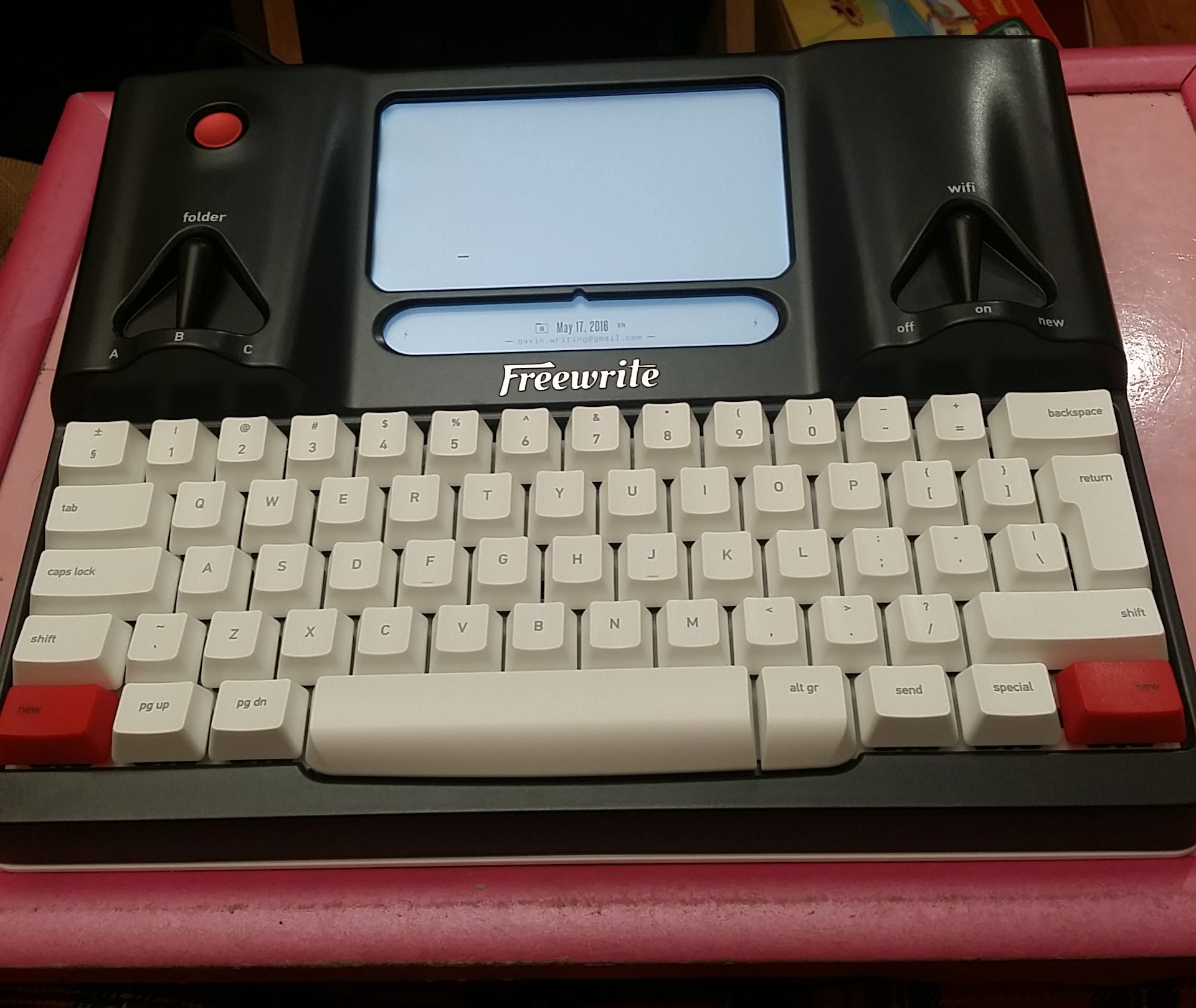
I’m pleased to report I managed to submit it via the university’s online system on Wednesday and – as Dundee hasn’t gone fully electronic yet – in person at the office on Thursday. There will be more to come next semester, but that’s it for the moment.
Unlike Douglas Adams, I try my utmost to respect deadlines. Yes, other priorities are going to stand in the way from time to time, but not on every occasion. The last thing I want is to gain a reputation as someone who says they’ll do a piece of work then doesn’t deliver in time. Even with the essay business, I made sure there was an entry here every Monday.
Ladybank railway station Original description: Ladybank Railway Station Looking down the track, straight on for Perth, bear right for Dundee. (Photo credit: Wikipedia)
On Saturday evening, I was booked to read poetry at Off the Rails at Ladybank railway station in Fife; it was at one point the stationmaster’s house. About 50 people are packed into a single room, while poets and musicians perform in front of an open fire. The building seems to be well soundproofed, so it’s rare to hear a train; the loudest noise was the wind howling outside the window.
Unfortunately, two of the four poets had to cancel, and only one replacement could be found at short notice. This gave me a deadline of less than half an hour to expand my set accordingly. I’d brought seven poems with me, which would push me just over my 10 allocated minutes.
Fortunately, the rest of my work is backed up to Dropbox and I was able to read a long piece from my phone to make up the time. It ended up being an excellent night, and I’m happy to do it again in the future.
I’m afraid last week’s entry was rather short, and so is this one.
For the first time in six years, I’ve been unable to complete the 50,000 words required for a NaNoWriMo novel. It’s not that I’m stuck with the story – far from it, in fact – but I have to write a detailed essay about Paradise Lost by John Milton for my MLitt degree, and it’s due for this Friday.
Happily, the essay is now under control and I should be able to submit it a day or two before the deadline. After that, I’ll aim to resume my usual long entries.
I realised recently that I hadn’t sent off any work to publishers for rather a while, and now I’m beginning to make up for it.
When you submit short stories or poetry on a regular basis, you quickly realise there are two broad types of market.
Directly to publishers. This is where an publishing house invites submissions of single poems or stories for an anthology, often on a set theme, and an editor decides what’s included. There are usually no charge to send in work and the author is often paid a flat fee or a rate per printed word.
Competitions. This is where an organisation invites submissions, often on a set theme, and a judge or panel of judges decide who wins. There is often a charge to send in work, and the winner usually receives a cash prize along with publication.
English: Wil Wheaton at the 2011 Phoenix Comicon in Phoenix, Arizona. (Photo credit: Wikipedia)
At least that’s how it should work. However, I’ve been involved in more discussion of late about places that aren’t giving a fair deal to their contributors. This includes Star Trek actor Wil Wheaton, who was asked to write for the Huffington Post in return for ‘exposure’.
I’ve heard anecdotal evidence from a couple of poet friends that a popular magazine follows a similar ‘exposure’ model with the claim that they’re a small press and are unable to pay. At least one of these friends has been professionally published elsewhere and will no longer submit to this magazine.
I’ve also recently spotted an advert for a competition with a £10 entry fee or £11 if submitting online, and the prize is to read your work at their event. To me, there’s a lot wrong with this.
Firstly, the price difference is not explained; contributors appear to be penalised for not wasting paper. Secondly, it’s still around double what you would expect to pay to enter a competition. Thirdly, there’s not so much as a nominal cash prize offered, nor any mention of a contributor’s copy.
My advice is to be clear about your reason for sending your work to a particular place. Ask yourself whether the reward is proportionate to its quality and to the financial position of the publisher.
That principle still applies to charity or fundraising work. This year, for instance, I’ve been invited to perform at local landmarks to raise funds for the maintenance and restoration. As I know the organisers, I’m clear that I’m donating my time and work to these causes. One of them even offered me travel expenses, which I declined.
But don’t think everywhere is out to get you. Gutter magazine offers a two-year subscription rather than cash payment, which I consider to be fair, while feminist zine Artificial Womb is a tiny operation but makes a point of paying every contributor.
And a final piece of advice: Wil Wheaton wrote that the exchange he had with the editor wasn’t unpleasant, and that he didn’t blame her for company policy.
Echoing this, it’s always a good idea to be civil to editors no matter how the conversation ends. We’re used to reading about authors and other celebrities who act like divas, but if you develop a reputation for being difficult – especially at the start of your career – word will get around quickly and potentially close off avenues you hadn’t yet explored.
It’s been a busy week for writers and artists in Dundee.
Last Monday, our regular Hotchpotch meeting was held aboard a 19th-century warship. More than 40 people showed up – double our usual maximum attendance – and we enjoyed a fantastic and varied night of writers reading their own work. We even made the local paper. There’s a picture of me dressed as a captain.
Then the Dundee Literary Festival began on Wednesday and ended yesterday. I attended a selection of events, including a play set in a disused jute mill, an interview with Nick Frost from Spaced and Shaun of the Dead, and an investigation into the success of Ladybird books over the last 100 years. There wasn’t an event I didn’t enjoy, but I’m not going to review any of them here. Instead, some of them have already been reviewed by students.
In the middle of the festival, I saw Benedict Cumberbatch as the eponymous Hamlet with the National Theatre. The live cinema screening was sold out, but it was well worth seeing the recording. I’m glad, however, that I read up on the story before seeing it. I found it a lot easier to follow when I heard the words than when I read them on the page.
And at the weekend, artist studios WASPS held an open house, allowing the public to see how their art is made and to buy it directly from the creator. I went along with a friend to visit artist Jennifer Robson and jeweller Genna Delaney, among others.
Unfortunately, Saturday’s session was cut short by a fire alarm apparently set off by someone using a blow torch. The building was perfectly fine, but the alarm malfunctioned and wouldn’t switch off.
And just as these finish, National Novel Writing Month begins on Sunday 1 November. I’m returning as the Dundee & Angus regional organiser for a second year, and there will be someone else helping me.
The five previous times I’ve done it, I’ve exceeded the target, sometimes by less than 100 words. But one of the messages I always give out is that there’s no shame in not reaching the 50,000 word target. I’ll keep you updated during the month.
Last week, I discussed what to do when you don’t like someone else’s work, be it a novel or a live event, and a big thank-you for all the responses I received. However, I had an experience last week where I didn’t like part of my own work.
I was invited to write a piece inspired by the D’Arcy Thompson Museum at the University of Dundee, which would then be performed in the museum a few weeks later. Sir D’Arcy was a naturalist who disagreed with some aspects of Charles Darwin’s work, and the museum houses his surviving specimens.
I’m quite used to turning round work very quickly: I write it, leave it alone for a few days or a few weeks – depending on the deadline – then give it an edit. If I’ve time, I might be able to repeat this process, refining further each time.
With the Sir D’Arcy piece, I struggled to come up with the idea in the first place even after two long visits to the collection. Finally, I wrote a short poetic monologue inspired by a seven-foot narwhal tusk on the wall. The piece imagines what might have happened when the tusk was delivered to Sir D’Arcy and his students, and uses this to demonstrate that some of his ideas and views are now accepted by today’s scientists.
I was happy with the first section of the piece, but was less happy with the second, which I felt broke the Show, don’t tell rule. I felt it was too factual as the story was not shown through the actions of a character, as in the first section. The actual reading went well, but if I had more time, I could have improved it; in the process of writing this entry, I’ve thought of a possible way.
However, unless I’m invited back for a second performance – and that is a hint to the organisers – I have to accept that I put out what I consider to be substandard work.
I recently visited the D’Arcy Thompson Museum at the University of Dundee, where a young girl was being shown around by her mother. The collection is full of animal specimens from Sir D’Arcy’s work, but this girl was having none of it, constantly saying, “This is boring, there’s no dinosaurs.” There have been a couple of occasions recently where I’ve felt like doing this myself.
A genuine extract from my notebook upon seeing Jeanette Winterson
One of them was at a talk by Jeanette Winterson to promote her latest novel The Gap of Time. The majority of the event was spent showing videos about Shakespeare and speaking about his life. It wasn’t obvious at first that she was referring to the structure of her book, but even when it became clear, it felt rather disjointed and rambling. Thankfully, once Winterson began answering questions, her own personality shone through; much more engaging than the showmanship that had gone before it.
I also recently began reading E M Forster’s A Room with a View, one of the ten Penguin Classics I have on my shelves. However, I was soon overcome by some confusion. Much of the first couple of chapters is about the two sisters, then other characters appear, but it isn’t clear where they’ve come from or where in Italy they’re currently located.
My puzzle is what to do if I don’t like an event or a book, or what should I have done.
In the case of Jeanette Winterson, I probably would have left the room if I hadn’t been seated in the middle of a row of about two dozen people. By the same token, I would have missed the excellent question session if I’d gone. As for the book, I’m still reading it because I’ve been gripped by the dialogue, but the appearance and disappearance of characters is rather jarring and I’m debating whether or not to abandon it.
So my question this week is: what would you have done if you were at an event you couldn’t take to, or reading a book that didn’t fully engage you?
Before I begin the entry proper, I need to ask a question of the WordPress community.
Whenever I post an update, a link is sent to three social media sites. The Twitter and Google+ connections have worked from day one, but the Facebook one needs to be refreshed at least once every couple of weeks or the link isn’t posted. Every so often, I also remove the WordPress app from Facebook and reauthorise it, but that has no long-term effect either.
How do you fix this permanently? I’m fed up of having to make a manual post to Facebook.
Last week, I mentioned I was attempting stand-up comedy for the first time through Bright Club. It was, for a while, looking like it might be a disaster. When I was rehearsing at home. I kept forgetting to say important lines. At the rehearsal on the day, I forgot which section came next and had to ad-lib until I remembered.
During that final rehearsal, a lot of my material hadn’t received much of a reaction, probably because I was speaking to the other comics and they’d heard much of it already. But at the end of that rehearsal, the organiser wanted to check the microphone level, so I recited a limerick that wasn’t part of the act. It went down so well with the others that I was persuaded to slot it in.
This is not the venue I was in. It’s merely a generic representation of it. (Photo credit: Wikipedia)
There were six acts performing; I would be fifth on the bill. I chatted to the MC before the show and in the interval and we agreed it was going well. All I would need to do was remember all my lines, plus the limerick, plus the other tweaks that were suggested, plus a prop I needed, plus to speak slowly enough so everyone could catch my words.
When I walked on, I began with a joke that referenced the previous act, then launched into my own material. Most of it got the reaction I wanted, and the limerick even earned a round of applause. Indeed, everyone was a hit with the audience.
Would I do it again? Of course I would. Bright Club is slightly limiting in that you have to talk about your research; I could have crowbarred twice as many gags in there if I’d been free to discuss anything.
The performance was captured on camcorder, but it’s not yet available as it needs to be edited. I’ll make sure you’re the first to see it, Facebook connection permitting.