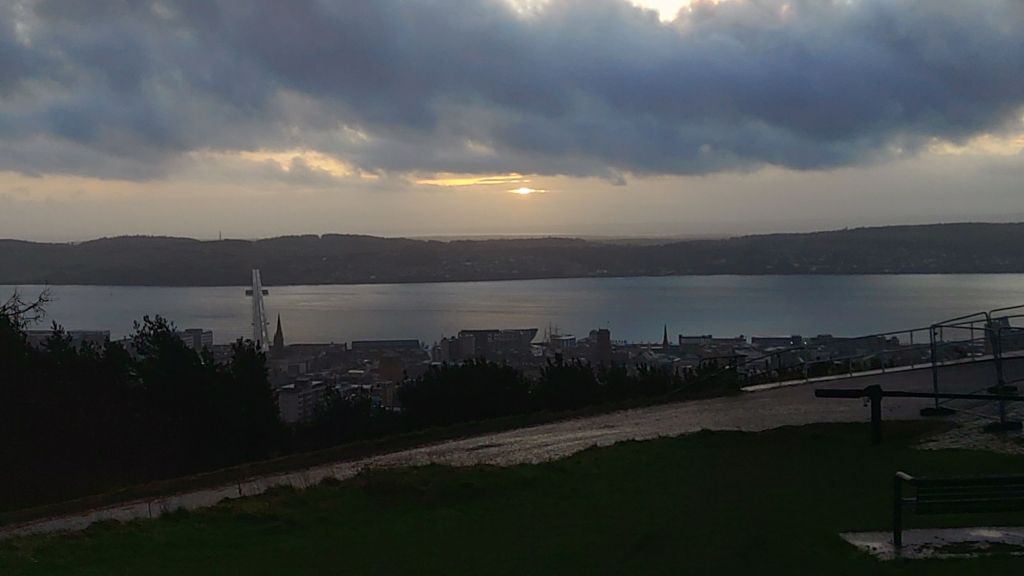
A Glimpse Into Prison Life

Former French president Nicolas Sarkozy revealed last week that he intends to write a memoir of his 20-day incarceration. Right now, legal action is still ongoing and a fresh trial is scheduled for early 2026, but it promises to offer some insight into how someone who once held such high office navigated his sudden loss of freedom.

Sarkozy will also join a long line of political and literary figures who have turned prison life into prose. Jeffrey Archer, the former Conservative MP, produced his Prison Diary trilogy in the early 2000s. In these, he chronicled his time as Prisoner FF8282 in high- and lower-security institutions. The books are part reportage, part literary exercise, and – let’s be frank – part self‑vindication.

Prison has often served as a crucible for writing. Archer was already an established novelist, so it was only natural that his time behind bars would lead to publication. his 1979 novel Kane & Abel is one of the bestselling books of all-time.

Going back earlier in the 20th century, we have Nelson Mandela’s Long Walk to Freedom from 1994. Strictly speaking, this is an autobiography rather than a prison diary, but he spent more than a third of his life locked up.

The final example that comes to mind is De Profundis, a letter from Oscar Wilde to his friend and lover Lord Alfred Bosie. Although taking up 80 sheets of handwritten notepaper, it’s a far shorter read than any of the above. The overall tone here is one of suffering and despair, with the latter part infused with theological musings.

You can almost guarantee Nicolas Sarkozy and his team are in discussions with publishers as we speak, ready to roll after the final outcome of the case. It’ll be interesting in due course to gauge how his story will fit into the long tradition of prison memoir, and whether it changes how he’s perceived by the public.

Bond in a Bind

NB: This entry explores plot points from the end of the James Bond film No Time to Die. If you'd rather not know, it's best to skip this entry.

As authors, I’m sure we’ve all written ourselves into a corner at some point.

I faced this problem a few years ago after I published what was intended be a one-part story on a writers’ website. There was an enthusiastic reaction from readers, so I felt compelled to write more chapters, but the characters were all scheduled to leave school and I couldn’t realistically take them all to the same college.

Fortunately, it was an ensemble cast, allowing me to pick a few main characters and introduce others, and the story went on to comprise 25 chapters altogether.

But what if you know millions of people are waiting for you to solve a plot problem? It’s been reported over the last few weeks that the writers of the James Bond franchise have a hit just such a stumbling block.

In all the stories from Dr. No to Spectre, our hero has been forced into some difficult corners, then has ultimately escaped in one piece. But at the end of No Time to Die from 2021, Bond is killed in a missile strike, so the question is how to bring his character into a new screenplay.

If there had been any ambiguity surrounding his death, this problem might already be solved, fudged, or even circumvented altogether. Fans, by contrast, clearly saw what happened in that film and won’t accept being told otherwise.

It’s worth noting here that most of the Bond films from the last 60 years were made by Eon Productions Limited before creative control passed to Amazon MGM Studios in February 2025. I’m conjecturing, but perhaps the former owners knew a sale was in the pipeline and deliberately deployed the fatal storyline with the intention of delaying or stopping future development. This would effectively end the James Bond series on a natural break.

And yet there’s a definite thirst from filmgoers to keep the franchise alive. While it might be difficult to see a way forward at the moment, there are a few options the new writers might consider. Here are a few, starting with the one I believe is least likely.

Write off the previous film as a dream

Because it’s been discussed and parodied so much, it’s not a spoiler to mention that in 1986, the 10th season of Dallas effectively wrote off the ninth season as a dream. While that show was a little over-the-top, as is the Bond franchise in its own way, I’m confident the new writers won’t lower themselves to this ridiculous premise.

Ignore the plot point

Many sitcoms and dramas reset the story each episode, knowing that TV channels sometimes air them out of order. There may be plot points that develop over the season, but these are unlikely to be necessary for understanding the plot of individual episodes.

The key here is that each new conflict tends to be resolved by the time the final credits roll, leaving the characters are in much the same position as where they started.

As such, the death of a main character may be too large of an issue to ignore, so I find it unlikely this will be the approach taken.

Reboot the series

Over the last two to three decades, there has been a trend to give series a reboot, borrowing a term from computing jargon.

We know another actor – yet to be announced – will take over from Daniel Craig. Also, rebooting isn’t unknown to the Bond franchise, with GoldenEye (1995) and Casino Royale (2006) forming fresh starts.

Perhaps this is the perfect time for a third such reboot, ushering in a much younger main character and having him go through the process of learning the ropes.

Show the succession of the identity

Since Bond works for MI6, audiences expect secrets to surface. To my mind, writers can use that to their advantage.

Supposing the code ‘007’ and the name ‘James Bond’ aren’t personal identities at all, but titles passed to each new agent. When one agent is lost, another steps into the role. The concept could easily conveyed through dialogue in an early scene. Besides, fans are already used to actors changing over time, so this wouldn’t feel too jarring.

In my view, the final resolution will be along these lines, while keeping within the established universe and canon.

The Abridged Pecha Kucha

A couple of weeks ago, I mentioned I was invited to give a talk in Pecha Kucha format at the Dundee Rep theatre. I chose the topic of my Millennium Bridges tours from 2023 and 2025. It’s worth looking back at that previous entry to find out about my preparations.

A few days beforehand, I was told the running order. I didn’t mind where I would be placed on the bill, but going second allowed me to relax for the rest of the event. The theatre was set up like a cinema, with a large screen at the back of the stage, plus two TV screens at the back of the auditorium for

I was initially sceptical about being able to commit the entire speech to memory in such a short space of time. Assuming an average of 50 words per slide for 20 slides, that multiplies to 1,000 words. Instead of learning the script word for word, I found the pictures became an aide memoire, giving me a general idea about the next part of the speech.

There are legitimate times to learn by rote – such as acting roles – but I felt this wasn’t one of those occasions. As such, the script was slightly different each time and that gave it a more natural flow. There was no rule against reading from a page, and some of my fellow speakers did just that.

I also warned the organisers in advance that I would be performing while wearing my jacket and bag, as if I’d just come in from the cold, and I wasn’t about to run away.

The event was filmed, but the footage isn’t yet available. In previous years, the organisers would usually stream it online, but that didn’t happen this time. For now, all I can offer is a still image of the audience:

Credit: Aylish Kelly

Topics covered by other speakers included: gardening, pub quizzes, an assortment of community and social engagement projects, and even an interpretative dance to cap off the evening.

Afterwards, a few members of the audience congratulated me on the talk. One man noted that I’d managed to time the end of my speech for exactly when the last slide left the screen. I thanked him but emphasised that it was a coincidence and I could easily have overshot the mark.

A long-term ambition is to help people find the confidence to speak in public, whether it’s for a social event like Pecha Kucha or convincing a boardroom of directors to fund a business project. Heck, maybe that could be my next talk. For the moment, I’ll drip-feed you one piece of advice for free:

Going on stage produces a rush of adrenaline, especially if you’re not used to it. Since it can take up to 30 minutes for this to deplete, and up to an hour for the effects to wear off, it’s best not to go straight to bed. Instead, I recommend spending that time winding down: take a walk, read a book, or listen to the radio.

Who Reads This Stuff Anyway?

The first entry to this blog was posted on 10 October 2013, making it 12 years old last month.

The intent was to create a deadline each week so I would keep writing regularly. That’s going well so far because when this entry is published, it’ll be number 641, or an average of at least one entry a week. But how many people are likely to read it?

Well, that depends what measure you use.

If you look at each entry, you can usually find at least one or two Likes, although some have in the region of eight or nine. The same names tend to pop up week after week. Altertatively, we can look at stats provided by WordPress from December 2024 onwards. The number of monthly visitors ranges from 113 throughout May to 548 in October – with one outlier.

For some reason, August attracted a total of 1,163 unique visitors, most of whom came back two or more times:

Data visualization of site traffic from July to November, showing a sharp rise in both views and visitors during August 2025. Tooltip reveals 2,742 views and 1,163 visitors for that month.

The timescales match up with two entries from that period. The first talked about an Edinburgh Fringe show by Ross McCleary and Stefan Mohamed, while the second addressed the thorny topic of Creative Scotland curbing its funding. I can only expect one or both topics were on the minds of my audience.

All of which is interesting to me, but I haven’t even touched upon the reason I started writing this entry.

Every time I hit Publish, an email is sent to anyone who opts into receiving notifications. I was advised yesterday by a long-term aquaintance that her email provider had suddenly started placing my WordPress notifications into a folder, starting with an entry from June about audio dramas. Before then, the last email in the folder was from a reply I’d made on LiveJournal in December 2016.

Unless something unpredictable happens, I know this blog is never going to reach a wide audience. It helps me to stick to a regular deadline. If it finds an audience, then marvellous, and if not, nothing is lost.

Accepting One Invitation and Declining Another

I’m pleased to report I’ve been invited to take part in a Pecha Kucha event on Friday 7 November at the Dundee Rep Theatre.

These talks follow a rigid format. Speakers need to prepare 20 slides, which will be projected for exactly 20 seconds apiece, so the accompanying speech must match the time available. Less rigid is the choice of topic, which can be almost anything, provided it’s suitable for a family audience.

I’ll be talking about my trips around the Millennium Bridges in 2023 and 2025.

My challenge here was to take the complex story of the two trips and weave them into a story that the audience could easily follow. This meant indentifying suitably strong start and end points, while needing to eliminate a lot of detail along the way. If unconstrained, I could easily make the story into a half-hour speech.

I thought the accompanying pictures would be the easy part, since many of the were already taken. However, they all needed to be JPEG files converted to a specific resolution and dots-per-inch value. I’m not arty at all, so I relied on online tools with hit-and-miss results; one in particular kept converting pictures at random from JPEG to PNG.

The hard work won’t be over until the night of the presentation. While I have a good idea what my script says for each slide, I need to rehearse and make sure I hit all the relevant points.

But I can’t take every opportunity.

At the end of last week, an event organiser offered me a ten-minute slot to read poetry at his regular spoken-word event near the end of November.

I’ve wanted to go to this event for a long while, but it always clashes with my weekly writing group on a Tuesday. I was even inclined to write a new piece to fill the ten minutes.

Realistically, our own event has to take priority because our members expect us to be there. If my co-host or I know we can’t make a session, we try our best to cover or to make it an online-only event, depending on the type of interruption.

This time, it wasn’t possible to clear the day because of our other commitments. I reluctantly had to turn down his generous offer, with the caveat that I’d be happy to consider other days of the week.

A Look Back to Ten Years Ago

I have a couple of upcoming projects that I’m not ready to talk about just yet. To fill the gap, I’ve instead looked backwards in time to the entry closest to today: 26 October 2015.

With the title Relentlessness, the entry described a hectic week. The open-mic night Hotchpotch held an event aboard the vintage HMS Unicorn, the Dundee Literary Festival had just been and gone, and the artist studios WASPS held an open weekend. I’d also been to see Hamlet at the cinema, presented by National Theatre Live, while our writing group was gearing up for National Novel Writing month.

As I read back this snapshot of events, they somehow don’t feel like they happened ten years ago, even though I rationally know they did.

For instance, WASPS studios is very much still open for business and Jen Robson is still around, albeit working from a home-based studio. Hotchpotch is still going, although we’ve never been invited back onto the Unicorn. Then we have National Novel Writing Group, which only ceased operations this year.

On the other hand, although none of us realised it at the time, the last Dundee Literary Festival would be held in 2016. It took until March this year for a replacement event, the Dundee Book Festival, to start up.

There’s something both appealing and lamentable about that ephemeriality. No doubt I’ll feel the same when I look back upon this year’s projects from 2035.

Gttng Strtd Wth SMS

Last week’s entry was all about postcards. In writing about these, however, it was necessary to touch upon its replacement technology: SMS. I realised I had more to write on the matter. so today’s entry effectively serves as a part 2.

When the first SMS-capable handsets became available, they wouldn’t contain a full keyboard. Instead, each letter was mapped to the number pad in the following semi-standardised formation:

I say ‘semi-standardised’. The 0 key usually acted as spacebar, while 1 often produced symbols, but some layouts deviated from this. Ditto the toggling of capital letters, which we’ll disregard for the following demonstration.

To type the word BOOK, the following steps were necessary:

  • B required two presses of 2.
  • O – three presses of 6.
  • Pause for a second or press the right arrow, depending on phone, to allow the letter to register. O would otherwise loop back around to M.
  • O – three further presses of 6.
  • K – two presses of 5.

Overall, quite the frustrating process. It quickly became accepted practice to omit letters from words or use soundalikes. This might morph the word thanks into thx, or tomorrow into 2moro, which are still reasonably legible.

There were further innovations to come. One was the T9 system, which guessed each letter in context based on its neighbouring presses. To type the aforementioned BOOK, you would press the buttons 2-6-6-5 once each. The display might suggest BOOK first, but COOL or CONK could be selected from the menu, cutting down on overall presses.

Many phones would remember which words were used most commonly, but my Nokia 3330 never did. If I wanted to mention my pal Amy, I always had to scroll through BOX and COW.

Despite T9, the abbreviated style still persisted in popular culture for some time, with Fall Out Boy releasing a single as late as 2007 titled Thnks fr th Mmrs. It only died out when touchscreen input became more common.

Cards on the table, I was never sorry to see SMS speak disappear. Although it took longer, I liked to write my sentences out properly, and it could be challenging to decode some abbreviations. I much prefer what we have these days. No doubt the style will make a resurgence at some point, but I won’t be participating in that.

A Quick Word About Postcards

Although postcards are now virtually obsolete in daily life, I can remember a time when they were used to enter competitions, to cast votes in polls, and to let friends and family know you’d reached your holiday destination safely.

But when I’m going away for a day or two, I like to maintain the last of those traditions. In most cases, I know I’ll arrive back home before the mail does, even when it’s within Great Britain, but it doesn’t diminish the surprise for the recipient.

A typical card measures around four inches by six, although there are wide variations, with the front featuring a picture or design. The back is split into two equal sections, so your text has to fit into that left section because the address and the stamp will take up the right-hand side. You can also buy books of plain postcards where the address and stamp go on the front, allowing use of the entire rear side.

Still, the fixed format forces you to pick your words wisely or to minimise the size of your handwriting. The inventors of the SMS initially chose 160 characters as the limit based upon those restrictions.

In the earliest days of mobile messaging, each one typically cost between 5p and 10p to send; those figures are not adjusted for inflation. Some handsets supported longer messages, but each block or partial block of 160 characters was charged separately.

Despite this, an SMS easily undercut the price of a stamp in the second half of the 1990s – shown by this table from The Great Britain Philatelic Society – especially as you didn’t need to buy a physical postcard either.

The cost of SMS and similar messages today is negligable. Most phone subscriptions have some element of inclusive or unlimited allowance, putting the higher cost into perspective. On a day trip to Birmingham yesterday, I sent just two cards, but they cost me 87p apiece in second-class stamps.

Knowing I might not have a chance later in the day, my intention was to write them both on the flight and post them at the other end. I forgot to take them out of my bag until we were almost ready to land, but they’re both now safely in the post awaiting delivery.

Memorable Names for Fictional Characters

Most of the time, I find it easy to think of what the characters in my stories should be called. Their names often appear at the same time as the storyline.

I wrote one such piece in 2014 titled Adrian Eats the World, which appeared at the same time as the title. Until I found the file while writing this, I thought that was still its name. In 2015, it seems I had a change of mind and amended his name to Mikey. I can’t remember what made me change this, so it’s now been restored.

More recently, I’ve included a Rosalind McQueen because the cadence simply worked well. During the story, she changes this to Scott McQueen, which has a different cadence but is equally as pleasing.

The most difficult character to name was a sci-fi story set during the 1960s in a world where a group of intelligence agents were worried about an impending visit from aliens. This character was supposed to be the young man who had been drafted into the unit as a favour by his father.

I looked to take the James Bond approach, with an ordinary first name and a distinctive last name. It took weeks to settle upon Malcolm St Clement. Even then, I wasn’t certain because the only other person I could find with that last name was the actress Pam St Clement from EastEnders, and even that’s a modification of her real name: Pamela Clements. However, it sounded good, and I kept using it.

On other occasions, a name is the least of my concerns.

In one of my series, the first-person narrator remained unnamed until the 24th part. I didn’t even realise I was omitting the name at first; it simply wasn’t central to the storyline. Besides, the 2004 film Layer Cake pulled off this trick nicely.

Even once I became aware of the omissions, there were workarounds I could employ to avoid saying it. It helped that the series was an ensemble effort comprising seven other named main characters. Eventually, I decided to reveal the narrator’s name as a minor twist in what was intended to be the finale. I’ve since added a surprise 25th story.

The other layer to this discussion is the use of nicknames. I find these hard to pull off convincingly. Unexplained nicknames can be jarring, yet when they are explained, the backstory can feel contrived or a little too perfect.

In this instance, it might be wise to take a cue from real life. For instance, there’s a website for pilots and fans of the F-16 fighter jet that has a whole section devoted to the imaginative callsigns in the forces. A few are clever, but most are a little ramshackle and that makes them sound a little more convincing.

What We Talk About at Writing Group

For the last ten years, I’ve run a weekly writing group. This has almost always been on a Tuesday and with a co-organiser.

I inititally joined in 2010, when the group was still a branch of National Novel Writing Month (NaNoWriMo). I took over in 2015 once the original organisers graduated and moved away. After withdrawing our affiliation from NaNoWriMo two years ago, two of us now jointly run it as an independent group.

It must be stated that we have a manageable number of members, so other than a few word-of-mouth referrals, the group is not actively recruiting at present.

In its current form, members can drop in at any time during the two-hour session, either in-person or via Discord. They’re welcome to stay for a short while or the whole session, and there isn’t even an expectation to write. We frequently end up chatting, joking, making plans and/or solving problems.

But although that format is consistent these days, it took some trial and error to figure it out.

As the main NaNoWriMo challenge only took place during November, the weekly meetings coincided with that. After some enthusiasm by members, we cautiously extended the-e weekly meetings on a trial basis through December, then January, then February, and so on. People were still coming along, so we confidently started meeting up all year round. We now have a recurring table reservation and the staff know us well.

On a couple of occasions before the pandemic, I even brought the members around to my house on 31 October so we could begin to draft our novels at the stroke of 1 November.

While the meetings themselves have always been a hit, the members have rarely been interested in any formal activites such as writing sprints, feedback sessions or homework challenges. Variations of these have been attempted with different leaderships in different years, but none have caught on.

In Dundee, at least, the thirst is simply for ringfenced time to write every week and that’s what we provide.