The Story of a Faulty Laptop

About 2½ weeks ago, my laptop developed a fault. It had been tucked inside a protective sleeve, which was itself inside a rucksack, when I was caught in an exceptional downpour on the way to a pal’s place.

Although the machine wasn’t especially damp, I suspect the rain was the culprit. It initially switched on and worked as normal, then a blue-screen error was displayed. Fortunately, after being left to dry out for an hour, it gradually returned to normal.

And it kept working as normal until Tuesday night of last week, when the problems suddenly reappeared. This time, there was no blue-screen warning and no resolution even after drying it out for hours. It simply would not load Windows from the local hard disc.

Knowing I would need a PC for the weekend’s activities, I immediately looked for a replacement, settling on a second-hand Acer from CEX.

That said, I wasn’t worried about my actual files going missing. They were synchronised with OneDrive, and I have an external hard drive where I diligently back them up at the start of each month.

Well, all except one file.

On my desktop, I had a shortcut to Microsoft Word document where I’m writing a current story. I’d most recently updated it between the first and second failures of the former laptop. I thought this pointed to a location in OneDrive. To my surprise, it was on the local disc, the same one that became unreadable, and it didn’t appear to be backed up anywhere on the external drive.

I thought about the problem for a few days. While I don’t have a great deal of knowledge about the inner workings of a computer, I do know many systems are modular, so individual components can be swapped if you’re prepared to dive inside the cover.

I also discovered it was possible to buy an inexpensive piece of kit to turn a bare hard disc drive into a makeshift USB thumb drive. This allowed me to verify the disc itself was still working – and that document was intact. While the case was open, I also took the opportunity to swipe one of the RAM units from the old computer and double the memory of the new one.

At the time of writing, the new computer is almost entirely set up. By coincidence, this week’s entry was supposed to cover five or so items I rely upon as a writer. In light of current events, that’ll be pushed to next week or a future entry.

Meanwhile, here’s a timely reminder to back up your work.

Reaching Fever Peach

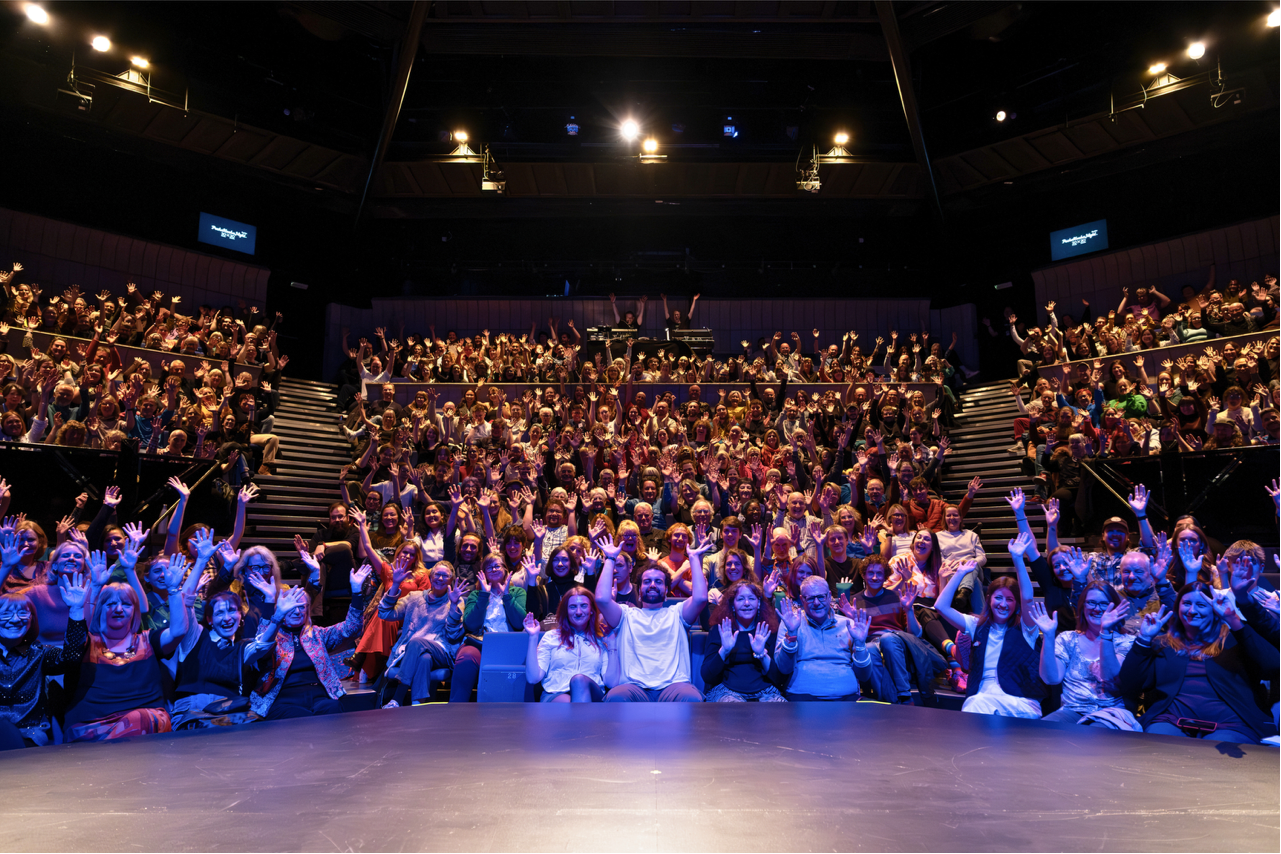
On Saturday just gone, I was given the opportunity to perform a 15-minutes of poetry at the Keiller Centre in Dundee. This was organised by local comedy band Fever Peach as part of their Monthly Indulgence event and here’s how they announced the event.

That said, I only learned of the opportunity on Wednesday and I didn’t have a themed set ready to go. After looking through my collection, the structure came together quickly, with the verse generally moving from more serious to more frivolous.

The actual reading time clocked in around 12 minutes. This was helpful as I knew there would need to be time left for applause and possibly banter with the hosts and the audience; I even gave out Biscoff biscuits as part of the performance.

And there was one other factor at play. When I go to events, I often like to write verse in situ. On one occasion, I wrote clerihews for all the performers who had gone before me. On another, I offered a poetic critique of all the art on the wall of the café. This time, I scribbled a short poem during the soundcheck, based on the, ‘One-two, one-two,’ that sound engineers often use to test microphones.

While the Fever Peach duo kept the show together, the other act on the bill was a travelling Mexican musician called Ed Stone. Despite breaking two different strings on two guitars, he acted as a melodic counterpoint to my poetry.

These shows always end with a complicated improv game, during which my mind went blank more than once, and Ed struggled a little because he was playing in a second language. Still, it was all a bit of fun.

The only downside was the size of the audience, with just five tickets sold. While it is true that the venue is quite hidden away, they always go down a storm and they deserve more eyeballs.

I would happily perform for Fever Peach again, and I look forward to similar opportunities in the future.

Closing Times

On Saturday, I was sitting in Blend on Dock Street and thinking about what to write for this entry. During my visit, I found out the café itself was about to cease trading at some point next month.

The following day, Blend released a more detailed statement on Instagram, confirming the end date as Sunday 10 August. From the pespective of its customers, it’s not just the closure of a handy city centre café, it’s the loss of an ideal place to run events. Off the top of my head, I can think of at least three pals who use the place for shows or gatherings, including the Hotchpotch open-mic I used to organise.

However, there are two factors in its favour:

Firstly, this is not the first time Blend has closed. In 2023, after a few years on another street, it was offered its current location and was quickly able to re-open. I’m not privy to the details of that arrangement, but who knows what the next 19 days might hold.

Secondly, there’s a second branch in the middle of Baxter Park, a largely residential area, that will remain open. This is handy if you were visiting the park anyway, but it requires a bus trip or an uphill walk from Dock Street.

From a personal perspective, I’ve already booked to be in Lancaster on the day of closure. As such, I won’t be there to see the shutter pulled down for the last time, but I will keep an ear out for this emerging story.


Separately from this, the publisher 404 Ink announced its upcoming closure earlier this month.

This is different from Blend because it won’t be an abrupt end. Rather, it’s a gradual process until summer 2026. Any upcoming launches will still be going ahead, and there will be discussions with authors about retention of rights.

As such, there isn’t much else to report on this situation at the moment, but it sounds like it’s all in hand and I’m sure we’ll hear more over the next 12 months.

Discovering Andrea Gibson

It was announced via Instagram yesterday evening that the poet Andrea Gibson had died.

A few years ago, I had the privilege of seeing Gibson live on stage. You can read the write-up from the first time in 2018, at the Mash House in Edinburgh. Unaccountably, I haven’t covered the second time; for my own future reference, this was on 20 May 2019 at the Queen Margaret Union in Glasgow.

Yet I’m struggling to add anything further than what I wrote in that first entry.

What I really want to do is encourage you to pick up one of their albums, from Bullets and Windchimes (2003) to Hey Galaxy (2018) and just listen to a few tracks. The imagery and the metaphors are delivered at a machine-gun pace, so don’t be surprised if you need to pause for breath. You can also seek out one of their collections, but – cards on the table – I think there’s more to be gained from listening rather than reading.

Andrea Gibson was someone who would never dream of demanding plaudits, but conversely, won so many fans by simply speaking about the world as they saw it. Had they lived past 49, I have the feeling we would have heard so much more over the coming decades.

The Looming Year

Every year, I take part in Fun a Day. I hesitate to describe it as a challenge or a contest because you’re only competing against yourself, but it’s an encouragement to create something during the month of January. This can be one project for the month or something you update every day, and/or some combination thereof.

I’m pleased to report the exhibition opened on Friday of last week, but more on that shortly.

In previous years, I’ve tackled projects involving writing, such as the fragments I penned in 2018. I’ve also come to realise that I don’t like keeping my work, instead preferring to recycle or reuse the materials after I’m finished with them.

The preparations for 2025 began earlier than ever: on 1 January 2024. I’m in the habit of weighing myself every day, although only the Monday figures are normally recorded.

So for every day in 2024, I tracked my fluctuations on a spreadsheet. A red cell represented an increase from the previous day, a green cell marked a decrease, while blue marked a stable weight or a day I didn’t have access to my scales. To save too much manual work, I quickly learnt how to program Google Sheets to show the colours automatically.

I then converted the colours into a corresponding chain of loom band. As I’m not artisitic in any way, however, I told the organisers to display it in any way they wished. It’s difficult to see in a picture, but it ended up in an M-shape on the ceiling of the café:

There was also an information panel on the side, along with rough notes about where I was in the chain.

An information panel discussing the artwork, plus a postcard hanging from a string with rough notes about it.

You can see the exhibition at Blend on Dock Street all this month. The website on that panel takes you to the official website for the project, which will stay up all month, but I make no guarantees beyond that.

Looking Back at Past Readings

At the beginning of May, I spoke about having my computer kitted out with 12GB of RAM, giving its processing power a significant boost from the previous 4GB. This meant Windows no longer had to leech space off the hard disc for basic tasks.

Even without that leeching, the disc was still almost at its limit – and that wasn’t including my videos, which had to stay on OneDrive only. A few weeks ago, I decided to have a look at these videos again and see whether any could be discarded.

After watching a few, I decided not to delete them. I instead followed the recommendations from several forum posts to convert them from the current data-intensive format into a more space-efficient one.

Many of the videos are poetry and story readings from live events spanning 2014 to 2022, with a heavy skew towards 2015 and 2016. They were intended primarily as references so I could improve my performances rather than finished products, so some of the camera work is shoddy, but the audio is crisp. I’ve fallen out of the habit of filming as I’ve gathered more experience.

Instead, the videos have become a memento of a new era. In the earlier ones, I’d just taken over my open-mic night Hotchpotch. We were in a different venue and the format was more like a story circle than a staged event.

Then there were other readings I’d forgotten, held in places such as Dundee Contemporary Arts and the Scottish Poetry Library. I recognised early drafts of works that have either become substantially different final products or have languished unseen since their composition.

While there are a handful of videos made after 2020, just two of these are readings. These were specific projects and were intended for a wider audience, so more care was taken over these.

Now the collection is under control, I’ll be more selective about what’s added. Any run-of-the-mill readings probably won’t make the cut, even if they might be interesting in years to come. Maybe I’ll make an exception if I’m ever on telly.

Letter-Writing Season Again

Shortly before I left for Sweden last month, I received two letters from pen-pals on the same day: one from Wales and the other the Republic of Ireland. They don’t know each other, so the timing was entirely a coincidence.

I’d already planned to send postcards to both of them while I was away, along with selected other folks. Since the Swedish equivalent of the Post Office allows you to buy postage online, I was able to stamp and address them in advance; it was just a matter of writing them while I was there.

But it’s now time to reply to the actual letters, so I’ve been plugging away at this for the last week or so.

I keep lined notepads especially for this purpose, particularly the Nu Elite brand. The pages have perforations near the margin so they rip off into perfect A5 sheets and fold in half for a C6 envelope. It doesn’t have to be that brand, as long at the paper is reasonably thick and has similar properties.

It’s all practical, and certainly less stylish than the letters I received.

The one from Wales has a striped coloured border, but not feint ruling on the writing area. If you ask me, it’s quite a skill to write neatly on unruled paper, as mine would start sloping up or down, no matter how careful I was. I typically write mine by hand.

Then the letter from Ireland starts off in a notecard with an intricate Alice in Wonderland theme before continuing on A5 paper, similar to what I use.

And just as I was writing this paragraph, my Welsh friend sent me a message to say the letter had been received. That’s good news, as her very first one to me went missing without trace. Fortunately, she’d kept a copy of it, although I never remember to take a copy of mine before posting. That said, it barely matters, as long as I’m reasonably careful not to repeat the same news every time.

The one bound for Ireland is around 80% complete, and just needs a final push to complete it. As far as I’m aware, the recipient doesn’t read this blog, so there’s no hurry.

I can’t see it happening any time soon, but I’ll maybe one day be able to introduce the two pen-pals so they can write to each other and complete the circle.

The Problem with Tiffany

About 15 years ago, I read the epic Herman Melville book Moby-Dick; or, The Whale. There’s one part I remember clearly, and it’s a quote from chapter 124:

The magnetic energy, as developed in the mariner’s needle, is, as all know, essentially one with the electricity beheld in heaven [...]

As the volume was published in 1851, it seems strange we’re seeing using the word electricity because it sounds too modern.

A few chapters earlier, however, the author explained how the ship was equipped with a lightning rod which was connected to a chain touching the sea bed. Again, that sounds too up-to-date, but it was a century after Benjamin Franklin’s kite experiment, so the movement of lightning was well understood by that time.

The author Nicola Cornick is attributed with naming this phenomenon The Tiffany Problem. The use of the name Tiffany as a first name dates back to medieval times, yet it feels like a 20th-century derivation. However, the term can be applied to any similar anachronism, not just names.

Conversely, the name of this observation isn’t actually that old, only dating back to 2018.

Another book where I spotted this was Dracula, where Bram Stoker mentions that Jonathan Harker has a Kodak camera. The Eastman Kodak Company was set up five years before the novel was published in 1897, but a 21st-century author might be cautious of including such a detail.

Staying in this universe, it’s possible to extrapolate in other ways. For example, some of the action is set in Whitby and this had long been connected to Leeds by rail, where Marks & Spencer was founded in 1884. As such, it’s canonically possible that Dracula could have enjoyed a cup of M&S tea.

Of course, as the problem originally highlighted becomes more widely known, that becomes the key to solving it. Now when readers encounter a girl called Tiffany living in the 1400s, they’ll recognise it’s historically consistent, and I think we’ll see authors starting to feel more relaxed about using it.

Wordy on the Dancefloor

Regular readers will know I’m in a poetry circle called the Wyverns. When we meet, we offer critiques about each other’s work, which has usually been written during the month leading up to the meeting. I find it keeps me penning new material on a regular basis.

This month’s submission was more unusual one. Last month, I went with a couple of pals to a club night in Glasgow and inspiration struck while I was on the dancefloor, so I moved to the side and wrote about twelve fragmented lines, matching the mood of the room.

At the weekend, it was time to edit the piece and send it around the other members.

On account of the fragmentation, my original plan was to turn it into a concrete poem, forming an explosion or a word cloud. This proved to difficult to translate onto the page. While experimenting with different arrangements, I hit upon the idea of varying the font size of each line instead. That worked a treat, meaning the four most important lines are in 22-point text, while the rest are 18 or 20 points. I sent three versions to the group: one in plain text, another in RTF format, and a third coded in HTML.

I don’t generally seek to format my poetry in anything but plain text, but it’s not completely unknown.

While looking for other examples, I found one from two years ago where the poetry was placed on a circular transit-like map. It made sense here not to have a fixed beginning nor end because the topic was about the transit of the seasons. There was also an older one where the poetry was placed inside an animated PowerPoint presentation. However, this was an experiment inspired by an artist pal rather than particularly suiting the piece.

In the case of this most recent poem, I believe the presentation adds an extra layer of impact. I’ve already received a couple of responses from the Wyverns, but we’ll see how it actually goes down at the meeting.

The Charm of Audio Drama

While almost every radio station can be accessed online these days, one of my favourite purchases from the last five years is a pocket DAB+ radio. I find it freeing to use a standalone device with few distractions that doesn’t use much battery.

That first radio was made by Pure, but it stopped charging some time ago. A local repair shop was physically unable to remove the cover, while the manufacturer declined to make an out-of-warranty repair. As such, I bought a refurbished one made by Majority. I hadn’t heard of this brand before, but it’s just as good as any other I’ve used.

I typically listen to BBC stations, particularly Radio 1, even though I’m more than a decade older than their target demographic. The attraction is that most contemporary music is upbeat, and I’ve found it increasingly difficult to listen to slow music over the last few years.

But I don’t want to focus on music output in this entry. I’m here to talk about speech. The corporation is a leading producer and broadcaster of scripted audio drama. Most of its output can be found on BBC Radio 4 Extra, sandwiched between comedy and occasionally poetry.

One drama I caught recently was Credit Risk by R D Wingfield, a name that might be familiar to fans of A Touch of Frost. I didn’t specifically tune in for this, but I was intrigued by how a gang infiltrated the offices of a credit card company to siphon off payments. I also didn’t specifically tune in for Double Income No Kids Yet, featuring David Tennant as half of the only childless couple in a friend group, but I’ve so far listened to two episodes.

Such audio drama tends to have a high repeatability potential. The Tennant drama has aged reasonably well since its original run from 2001 to 2003. Credit Risk, by contrast, is somewhat fossilised in 1977, but it’s a fascinating historical snapshot of when many card payments were done manually, and by characters called ‘Mr Shadbolt’ and ‘Sales Lady’.

I haven’t even mentioned long-running soap The Archers, although I don’t listen to that.

For those who have only watched TV dramas, there are some immediate differences in how the dialogue sounds. On the screen, writers aim for a more naturalistic style, since the setting can be made obvious through vision. In audio drama, the scene needs to be set with words, tone and/or sound effects.

On account of this restriction, the dialogue can sound somewhat clunky, even though the production team will aim to reduce the word count as much as possible.

Although there are plenty of podcasts featuring audio drama, there isn’t a commercial UK station with comparable output. Any speech stations tend to focus on news, current affairs, debate and/or sport.

I wonder whether there’s a gap in the market to add regularly scheduled audio drama. Such programmes are typically made on a shoestring budget, and I don’t foresee much trouble finding a sponsor to offset at least part of the cost.

In the meantime, however, it looks like the BBC has a practical monopoly on broadcast scripted drama.