I want to be a book star.

In the early 1980s, Van Halen famously requested a bowl of M&Ms at each gig with all the brown ones removed. This was reported in the press as typical rock star behaviour, but the request fulfilled a practical purpose.

The band carried so much equipment on tour that they were worried about accidents from roadies failing to set it up correctly. By including the M&Ms clause deep in the technical part of the contract, they reasoned that if the bowl wasn’t set up as requested, there was a good chance the rest of the technical setup had been ignored as well.

While writers and poets don’t need nearly as much gear as musicians, I think I’ve been to enough literary events to know what I would like and wouldn’t like if I were ever to launch my own book. It’s not to be a diva, I’m merely thinking of practical matters.

I’ve narrowed it down to five key points:

Disabled access

When I’m organising NaNoWriMo events, one of my prime considerations is accessibility. At my hypothetical book launch, this would be a dealbreaker. Everyone ought to be able to come in and hear all about my hypothetical book.

Standing up

Many studies have shown that sitting down for extended periods is a Bad Thing. Sure, most book launches rarely last more than an hour, but multiply that figure by however many launches you’re doing, and the time soon mounts up.

I’d therefore prefer to stand up as much as possible, especially while signing. This has the added advantage that I would be physically on the same level as the reader and it feels more of a two-way conversation. Speaking of signings…

Clearly signposted queue

I went to a launch in July that was so well attended, the bookshop ran out of seats. However, when the time came for the author to sign copies, nobody thought to direct people about where to queue up. Two queues were formed, and the author had to take turn about to keep the wait as fair as possible.

Short questions

I saw a cartoon a few months ago where an academic was being interviewed on stage and the caption read something like We’ve just got time for one rambling self-indulgent question. Unfortunately, I’ve been unable to find it again.

I would have no problem answering questions, but we’d all like to remember what the start of it was by the time we reach the end. One breath, one question, or we move on to the next person.

Red wine available to all attendees

Writers and red wine go together like rock stars and cocaine. I’m sure Van Halen would agree.

The bare necessities.

One of the best ways to edit a story is simply to give it time, much as wine tastes better when it’s allowed to breathe. But there will be times when there’s not a minute to lose and you’ve got to produce something out of necessity, and sometimes that leads to some excellent work.

I was once given a homework exercise from a writing class that was a fragment of a poem. Nothing was immediately coming to mind and I wanted to complete the exercise as I’d paid for the class. After sitting in the library then writing and writing for an afternoon, I eventually produced a rather short piece called A Big Leap but one I was fairly pleased with.

TimeOut
TimeOut (Photo credit: Wikipedia)

Some time later, the tutor alerted me to a flash fiction competition just three hours before it was due to close. I collated what were my best flash pieces at the time, gave them a quick edit, then sent them in. A Big Leap became my first published piece.

I’ve done this a number of times with my work. A looming obligation or a lack of time has a way of forcing you down an unusual path, or to come up with ideas that are unconventional.

This happened most recently in November when I was asked to write an original piece for performance later that month. After a slow start, it ended up being based upon someone I knew many years ago, but I probably wouldn’t have used him if I’d had more time to think about it.

On another occasion, I was all set to read out a particular piece at Hotchpotch, when I was inspired to write another one by a topical event on the news. If I’d left it until the following month, the impetus would be lost, and that gave me just three or four days to concoct the new piece. I’ve subsequently edited it and it now stands alone without the audience needing to know the topical references, and it’s one of my favourites.

But necessity, however superior a result it might produce, isn’t always to a self-imposed goal. When Anthony Burgess found out he had an inoperable brain tumour, he wrote several novels to provide an income for his widow after his death.

Putting quill to parchment.

Many authors are asked the same questions over and over again. One of these is often Do you write longhand or into a computer?

But however repetitive it becomes, it’s a question worth considering. A commercial novel averages around 80,000 words, and that’s just the final product, not taking into account the many redrafts that will inevitably have gone before.

Let’s consider the different ways that different authors physically externalise their words, and the alternative approaches that could be taken.

Learn to touch-type

One of the best choices I ever made at school was learning how to type with 10 fingers, as it’s a skill that served me well in my working life. There are a couple of huge advantages over using just two or three fingers: your word speed can more than double, and it spreads the effort between all your fingers rather than straining just a few of them.

Be advised that it takes a while to master initially, but you’ll eventually be able to do it without conscious thought. A word about tablet computers as well. These have virtual keyboards, so it is possible to touch-type on these, but you’ll need to keep an eye on your finger position as you won’t be able to feel for the keys.

Choose an alternative keyboard

It’s a well-known story that the QWERTY keyboard was originally designed to slow down typists as the first machines were prone to jamming. It’s less well-known that the jamming problem had been solved by the 1930s. This allowed August Dvorak to invent an improved keyboard to help typists increase their speed by placing the most common letters on the middle row.

Sadly, it failed to catch on widely, but it is available on every major operating system. I’ve used the Dvorak layout for some years and it has the edge over QWERTY in terms of word speed. To increase it further, you could try a chorded keyboard. Clerks of court and TV subtitlers use these to keep up with the pace of normal speech. I haven’t used one myself.

Open your notepad

Unless you’re employing a shorthand system, this slows down your thoughts to the speed of the pen or pencil, and some authors are convinced it makes for higher quality writing. Martina Cole claims to be able to tell when a novel has been written directly into a laptop, while James Ellroy sends his handwritten work to a typist.

Be aware, however, that there’s no backup unless you’re using carbon paper. I’ve been told that a highly regarded author was forced to rewrite a large section of a novel when the paper blew out of an open window.

Be a dictator

Barbara Cartland famously dictated her words to an assistant, sometimes producing around 7000 words a day. Happily, you no longer need to pay someone for this service, as voice dictation is supported by many devices.

When I first tried this in the late 1990s, I gave it up as a bad joke. It. Required. Each. Word. To. Be. Spoken. Individually. Today’s software works with normal speech to a reasonable degree of accuracy without any training, even with my Scottish accent, although I recommend doing some to improve it even further.

I often use Dragon NaturallySpeaking, which can also be used to control many of your computer’s functions. In my experience, the actual dictation is fairly quick; it’s the formatting that tends to take a while.

Unconventional means

Probably most famous user of assistive technology is Stephen Hawking. He uses a switch activated by his cheek to choose words and letters from a computer screen.

But another author had to use a more difficult method. Jean-Dominique Bauby was struck by Locked-in Syndrome, so he could only blink and move his neck in a restricted manner. He wrote every word of The Diving Bell and the Butterfly by listening to somebody physically reading out the alphabet and blinking at the correct letter.


There are many ways to put your words out there, and not all of these will work for every author. For me, it’s through necessity that I use voice dictation and handwriting because my fingers are currently strained with typing too much. So until they improve, that’s how I’ll be writing my work.

But I’ve long thought that when you’re forced to take a certain action, you can always learn something useful from it. And that’ll be the theme of next week’s entry.

Second chance saloon.

In 1951, the acclaimed novel From Here to Eternity was published. Many readers were unaware that James Jones fought to keep in sexual content and profanity, but he was forced to give in to the demands of his publishers.

It was only in 2011 that the deleted content was restored by e-publisher Open Road, who also released his book To the End of the War for the first time. Unfortunately, it came too late for Jones as he died in 1977.

In the same month in 2011, Kate Bush was allowed to use text from Ulysses in an album, having originally been refused permission in 1989. A little-known Tennessee Williams play from 1983 was also given its premiere.

Perhaps it was just a golden year for second chances. But attitudes and standards are constantly reshaping, editors come and go, and even individuals change their minds. What was unacceptable or clichéd several decades ago might be in fashion right now.

Major delays are extremely common in the screenwriting industry, where ideas can knock around for several years waiting for the right producer and director to pick up the project, not to mention the protracted process of re-drafting the script – often dozens of times – plus the actual filming.

Phone Booth (film)
Phone Booth (film) (Photo credit: Wikipedia)

In the 1960s, Larry Cohen first had an idea for a film set entirely inside a phone booth and he pitched it to Alfred Hitchcock. At the time, neither of them could think of a good reason to keep the character in the same place for an entire movie. When Cohen revisited the idea in the 1990s, he had the idea of using a sniper; the mobile phone had also been invented by then, and this is a major plot point. Within a month, he’d written the script for Phone Booth.

I’m aware that last week I discussed when to let go of work. But if you’ve had a manuscript languishing in a drawer or an unopened computer file from years ago, bring it out. Can you look over it with more experienced eyes? Have those who rejected it now moved on? Is the subject matter acceptable today, or perhaps even more pertinent than when it was written?

If you’ve answered yes to these, it might be worth another shot.

A minor word of warning, however. If Victor Nabokov had written Lolita today, it’s unlikely any publisher would have taken it on. And when an uncensored version of The Picture of Dorian Gray was published in that aforementioned golden year, many critics felt it inferior to the original.

You are here. ↓

If you’re a fan of The Big Bang Theory, you’ll know that Sheldon Cooper is particular about which seat he chooses, particularly in his own apartment. Writers can be similarly picky about where they pen their works.

Among my writer friends alone, there is one who writes better with absolute silence and another who penned most of her novel in a noisy student pub. There is no right or wrong way. For my own part, I’m typing this entry in one of my favourite places: at the bottom end of my bed, standing with my back to the window. But when I’m stuck on a project, I sit on the mezzanine floor of a particular cafe in town and it usually unblocks my flow.

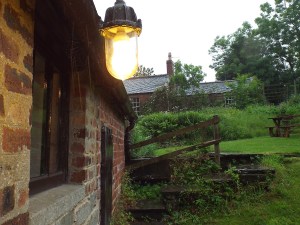
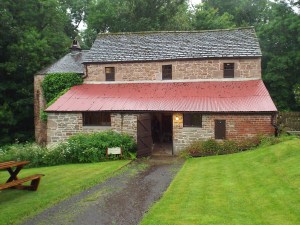
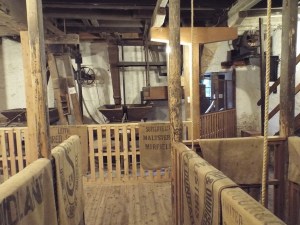
On Saturday, I was given the opportunity to attend a one-off writing group at the secluded Barry Mill near Carnoustie to raise funds for its restoration. After a tour and a demonstration of its working waterwheel and machinery, the nine or so attendees followed the stream back to the weir through acres of wild flora.

The tranquillity, location and history of the place was supposed to serve as inspiration for a poem or prose piece – and it worked. It took me some time to put something together, but I managed to write three verses, using the mill as a starting point, and nearly everyone had written something for reading out. It didn’t help, however, that it was raining onto our notepads for much of the visit, or that two of the chairs collapsed – mine included – before the session even began.

So if you feel your writing is becoming a little stale, try going somewhere else. Not everyone is able to escape to the countryside, of course, but it might work even to move location within the same general area or even the same building. Before I discovered my current spots, I experimented with a number of places before finding one that felt just right.

I’ll leave you with an electronic postcard of Barry Mill.

Do you know who I am?

Last week, I had the opportunity to show my published and soon-to-be published pieces to my work colleagues. Some of them were aware of my writing through reading this page, while it was news to others.

I don’t talk about my fiction writing much when I’m doing my day job. Although it certainly isn’t a secret, I believe there is a time and a place for promotion, and I was given that time and place on Thursday lunchtime, so I took advantage of it.

On Twitter and Facebook, it’s particularly important to keep a balance between ordinary updates and promotional copy. How often have you seen an account post exactly the same message four or five times a day? It makes people switch off, like that one individual you avoid at the party as you know they’ll talk about their pet subject ceaselessly. Besides, if you say everything upfront, what is there left to have a conversation about?

Two great places for advice about promotion – and there are dozens of others – include the writer Rayne Hall, and the marketer Wilco Wings whose advice can be adapted for writers.

And now I have your attention through our implied conversation, it’s time to launch into the self-promotion.

To date, three of my short stories have appeared in the following anthologies: Because of What Happened by The Fiction Desk, FourW Twenty-Four by Booranga Writers’ Centre (I’m not credited on the website, only in the book), and Alternate Hilarities by Strange Musings Press. While looking out materials for my work event, it seems I’ve misplaced my copy of Because of What Happened, so I’ll have to hunt it down like JR Hartley and his book about fly fishing.


I’m also due to have two poems published in an upcoming anthology called Seagate III when the last tranche of funding comes through, and one in a promotional leaflet for the MLitt Writing Practice and Study programme at the University of Dundee.

By coincidence, I received an e-mail last week from Giovanni Valentino, editor of Alternate Hilarities. In each of his anthologies, he likes to run a reprint from the magazine of the same name from the 1990s, but it’s becoming harder and harder to find the authors.

To this end, he’s asking the Internet for help. On the off-chance that you’re one of the following people, or that you know their whereabouts, please e-mail him forthwith at giovanni.valentino@strangemusingspress.com.

Issue 2

  • Alex MacKenzie, The Elvis Wars
  • Dana Cunningham, The Man Who Could Communicate with Animals
  • Buzz Lovko, The First Dinosaurs (a near Myth)

Issue 3

  • Dan Crawford, X-0001
  • Ken Goldmen, The Devil and Myron Rabinowitz
  • Michael Eugene Pryor, Irreconcilable Instructions

Issue 4

  • E. Jay O’Connell, Until the Tuna Runs Out
  • Alex MacKenzie, The Real Me

Issue 5

  • Tomas Canfield, Learning the Ropes
  • Leonard Jansen, Old ’99

Issue 6

  • Greg Costikyan, They want our Women!

The Finish Line.

Every April, there’s a contest called Camp NaNoWriMo, an offshoot of November’s National Novel Writing Month. In November, the aim is to write a 50,000-word novel in 30 days. Camp, by contrast, allows participants to choose a word goal starting at 10,000 and to work on any type of writing.

I intended to do more work on one of my unpublished novels, which is mostly written but needed extra scenes. I did write a few thousand words of it, but I didn’t feel the same enthusiasm as I did when I edited it a couple of months ago. Rather than bore myself stupid with it, I changed focus.

A piece of advice often given to new writers is Finish what you start. It’s rare that I don’t finish work, but I did have a few short stories that had gone nowhere. I therefore used the opportunity to finish two of them.

One had started off as a little self-indulgence but rereading it after this time allowed me to work out and deliver the message I was trying to convey. The other one should have been written in one session, but I was interrupted and never went back to it. I now have a satisfactory ending for both pieces and they’re ready for a second redraft – and a ruthless reduction in their word counts. As for the novel, I will redraft it when my enthusiasm returns.

Camp NaNo is traditionally done without a group leader and without meet ups in person. In Dundee, however,  we’ve been fortunate enough to have active members who have met up every Tuesday in April to work on their respective pieces. I set my own target at 10,000 words as I also had a university paper to hand in around the same time, but thanks to these meetings, I managed to reach the goal.

If you’re also in Dundee, by the way, there’s a new monthly Literary Lock-in at the George Orwell up the Perth Road. There are no speeches or readings, just an opportunity for writers to mingle and speak with each other. The next one is on 25 May.

L’étranger.

For those of you who enjoyed the main event in November, we’re now nearly a week into Camp NaNoWriMo. This is an offshoot project where you have a free choice of what you want to work on, and you can set your own word target from 10,000 upwards. However, this is not what I want to discuss today.

One of our group members keeps a WordPress blog about her experience of moving to Scotland, from eating ice cream on a cold day to voting in last September’s independence referendum. Indeed, we boast a number of members from other countries.

There’s a joke often repeated that there is no such thing as American English, there is English and then there are mistakes. Joke or not, I find it difficult to agree with this statement, as there are so many variations of English even as you travel within the same country. For proof of this conjecture, just ask people on your favourite social media site what they call the end slice of a loaf of bread and watch the arguments come to a head.

The Stranger (collection)
The Stranger (collection) (Photo credit: Wikipedia)

Regular readers will know that I’ve so far been published in three countries: England, Australia, and the USA. Sometimes when I send to US publications, I change the spelling and grammar appropriately, with guidance from Microsoft Word and my own knowledge of Hollywood movie dialogue. This isn’t, I admit, a perfect system. And yet the one story published there is written in British English, and that’s because the protagonist is obsessed with acronyms, and changing the location would mean rewriting those acronyms, so the Britishisms stayed accordingly.

I know virtually nothing about Australian English, so I stick with my usual spelling and syntax. Here’s where to buy FourW Twenty-Four containing my story, although they’ve omitted my name from the website. I made reference to a motorway, whereas a quick Internet search suggests that highway or freeway might be more appropriate. The type of road is not a major plot point in this piece, nor does the action take place in a specific locality, but I know a few expats who can advise me for next time.

While looking up these links, I discovered that another Gavin Cameron wrote a non-fiction book in 1999 about the threat of nuclear terrorism. So if that’s a subject that interests you, it’s the other guy you want to speak to.