Yesterweek, I talked about going to Dublin for a few days and what I would bring to read and write on the three-day trip.
The flight there takes about an hour and five minutes from Edinburgh. I used the journey there to write six postcards, which I would then post on arrival, and tackled some other writing on my return. As predicted in that last entry, the cashier was indeed rather bemused as she handed over my stamps.
On the second day, my pal and I took a train to Belfast and back, taking around two hours each way, I split my time between writing in my notebook and reading my magazine.
It was helpful to have this time, but it would be more helpful if I were able to recreate this experience at home without the expense of travel. I’ve heard the suggestion of listening to ambient train noises as I write, but I also rationally know I can step outside my door at any time; not something you can do on a mainline railway.
If you’ve any suggestions on that front, I’m all ears.
This festive season, a lot of writers will be given gifts of brand-new notebooks. It’s a safe bet that most writers will appreciate the thought, plus they’re relatively inexpensive for all but the fanciest designs.
Indeed, some writers find they can more easily start a new project with a fresh book, even if – paradoxically – nobody wants to spoil the new pages with ink.
I’m someone who doesn’t don’t fall into that camp. I do write by hand much of the time, but I can reach into my cupboard and pick up at least one that still has a number of usable blank pages. I also don’t have the storage space for too many new books. As such, buying new is a rarity for me.
There is one exception to this. Every year, I buy a specific type of diary, usually a Moleskine or a Leuchtturm 1917. These have a diary week on each left-hand page, while the right side is feint-ruled, allowing for notes to be taken.
I began this approach after reading The Books of Albion, a collection of diaries by the musician Peter Doherty. His diaries often document what happened during a particular week or contain fragments of song lyrics or poems. Some pages also act as a scrapbook, with photographs and tickets glued in.
While my diaries don’t have this level of detail, it’s interesting to read what I’ve written some years before. Often I’ll find a draft of something that was never developed into a final piece, or occasionally an early draft of a now-finished work.
So until I really do run out of space, buying new notebooks will remain a once-yearly occurrence.
Until a year or two ago, I didn’t do much writing on a notepad. It generally went straight into a computer unless one wasn’t handy.
I began to use a pad extensively for two reasons. Firstly, my small laptop has only just enough RAM to run Windows and was a pain to use. Secondly, I type extensively in my day job and my fingers began to hurt, whereas holding a pencil was a sufficiently different motion and it didn’t hurt.
Using a pad is also a different experience from typing: It slows down your thoughts so you become more focused on what to say next. It also looks less like a finished product and I’m more inclined to edit it. Furthermore, it’s easier on the eye to read paper than a screen.
Kids of the 22nd century: these are called books, which are a bit like websites on paper.
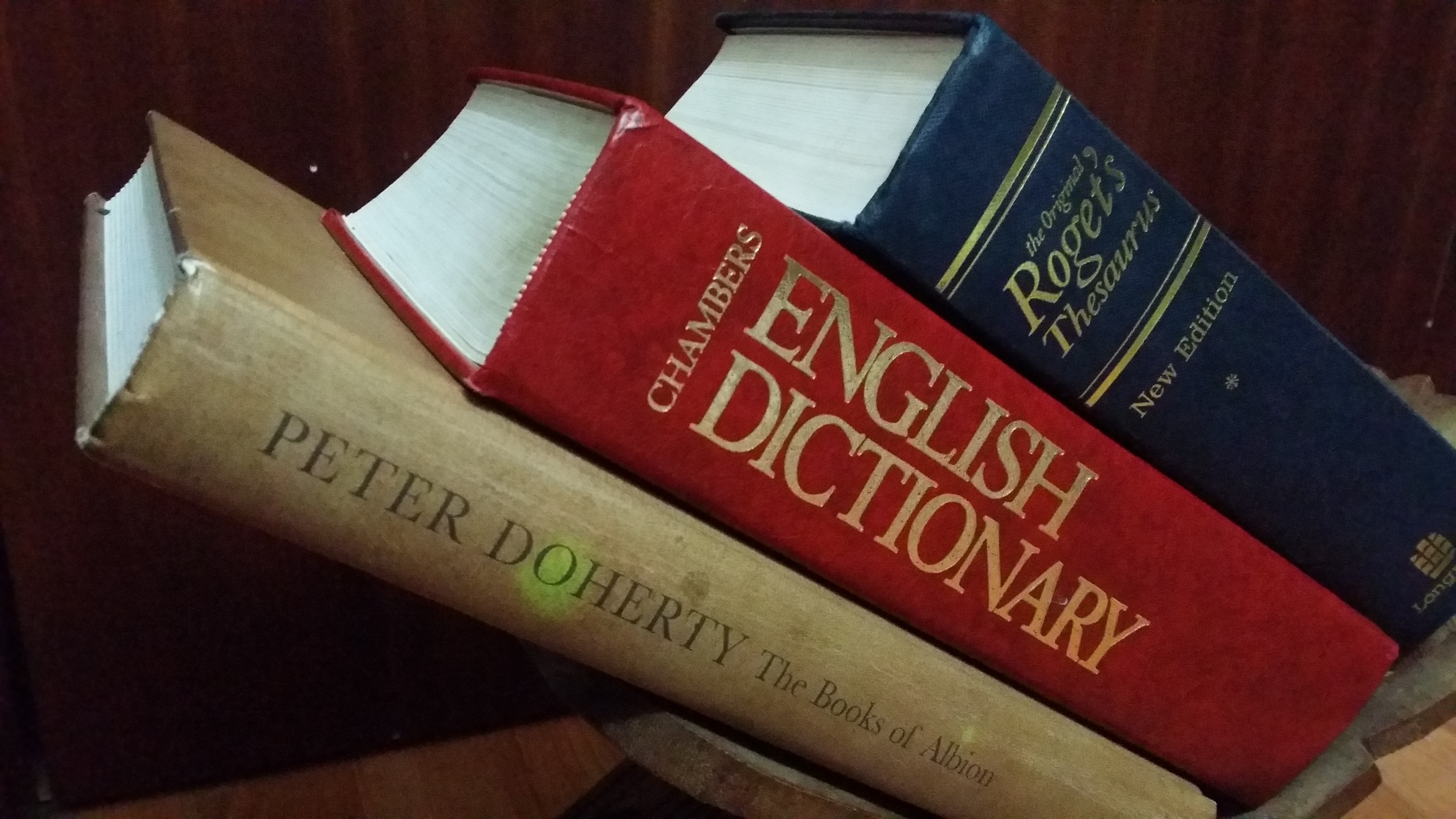
My fingers aren’t nearly so bad now, but I’ve kept up another habit I fell into during this time. I dug out my printed dictionary and thesaurus. Online references generally focus only on the words searched for, whereas flicking through a book can throw up possibilities from other pages. The trade-off is that paper references go out of date – mine are over 25 years old, but I rarely need new-fangled words.
On Saturday, it’s the 37th birthday of one of my influences, Peter Doherty. I feel compelled to point out that he prefers Peter over Pete. Last year, I bought The Books of Albion, containing writings from his many notebooks. I expected to read drafts of his poems and songs in there, and I wasn’t disappointed.
But he also includes a lot of diary entries, many of them with the dates on which they were written. He talks about what’s happening to him at the time, whether it be relationship problems, a budget trip to Germany, or his first professional poetry gig.
I stopped keeping a diary when I was about 20, and started a blog on the relatively young LiveJournal. Almost overnight, my style changed from private and unguarded to public and slightly more guarded. I still have some of the diaries but they’re unlikely to be available in the shops any time soon.
By contrast, Doherty’s diaries start when he was about 20, so there’s a maturity in them that mine don’t have. Yet it’s still clear he never intended them for publication, and it’s perhaps this honesty that makes his writing so compelling.
Initially, I found myself thinking back to what I was doing around the time he was keeping his notes. Then I began to wonder whether I could experiment with bringing back my pre-LiveJournal days and writing the occasional dated diary entry in my current pad. It contains mainly poem and story drafts, yet true events are at the heart of many literary works.
I would then have some events to draw upon when I need ideas.
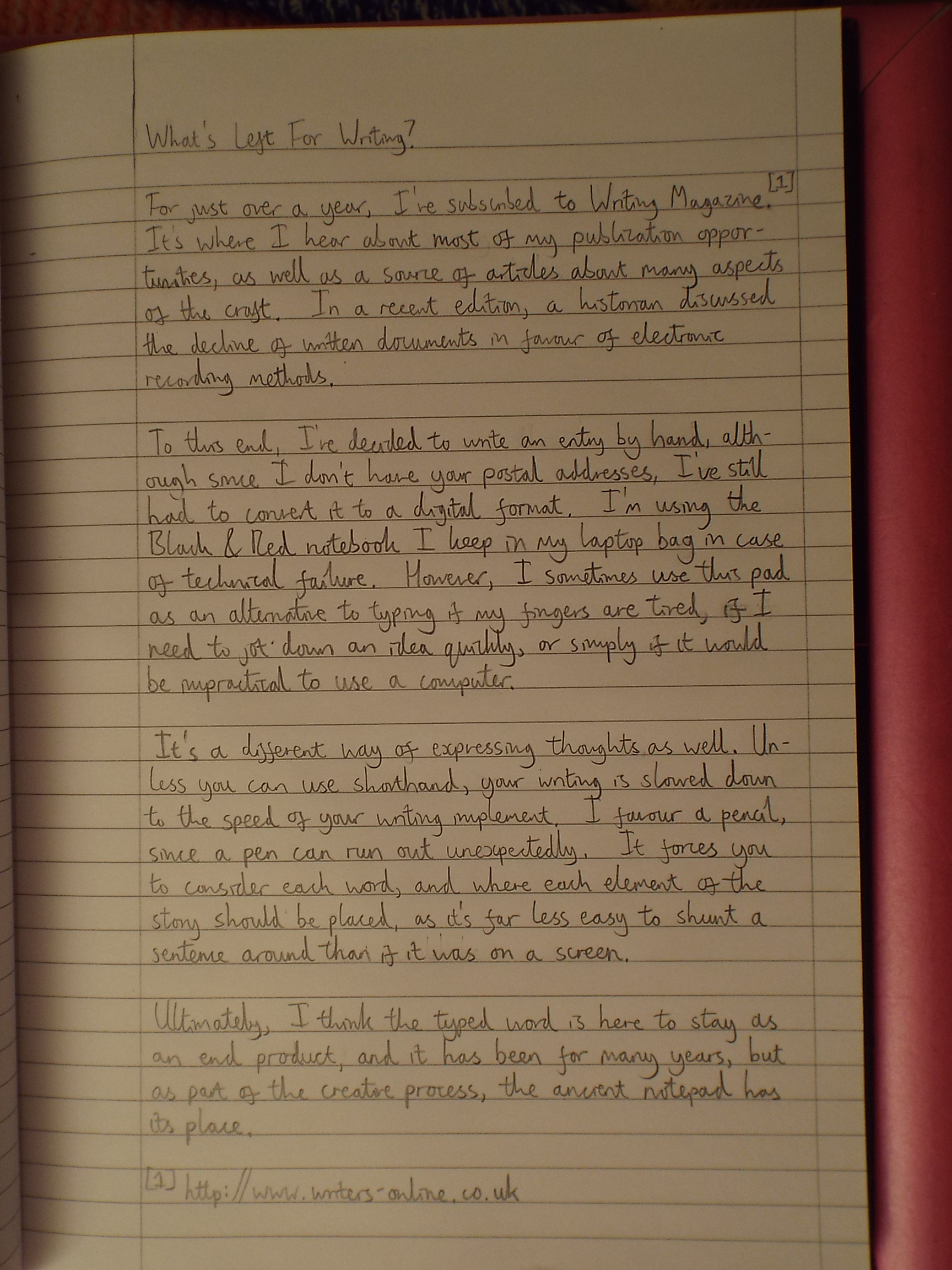
A few days after my handwritten entry last week, I was looking for something in my bottom drawer, when I discovered an old notepad. It’s nothing special; it’s a Tesco Value spiral-bound A4 pad with a slightly ripped cover.
I’ve used a quarter of its 80 pages, and most of it is taken up with attempts to expand on a fragment of poetry that I tried to expand into a song, although there is also a brief novel idea, pages of free writing, and a poem on the topic of my own handwriting.
Of these, I only consider the poem be a decent piece of work. As for the rest, I know what I was trying to express, but I didn’t have the techniques at my disposal to do it properly. But looking at the content, I’ve calculated that I last wrote in this notebook in September 2009, more than a year before I began writing. I’m therefore not surprised about the quality.
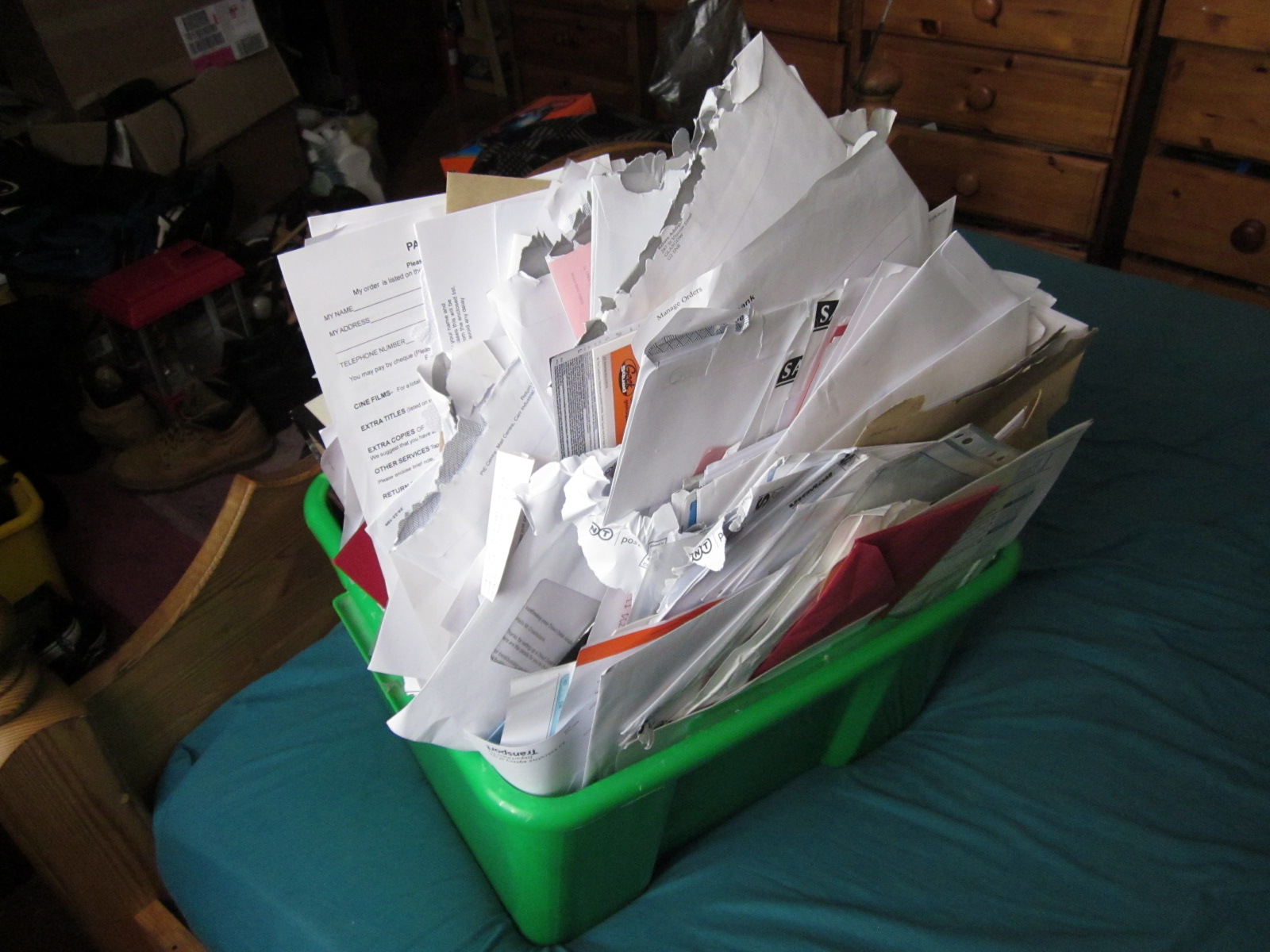
My filing system
Yesterday, I discovered other half-completed notebooks, but none as full or detailed as this one. I’ve noticed I rarely reached the last page, although I’m more than likely to complete my current ones. Also, there are hardly any drawings or even doodles, just text.
But the one notebook I would like to look at again is missing, believed lost. At my very first National Novel Writing Month meeting, my laptop battery died. I had to rush out and buy a notepad and mechanical pencil so I could continue my story. I had it about a year before its disappearance, and it contains drafts of my first novel, and some of my earliest stories. I don’t think I’ve lost anything, but I might have.
I know I’m not the only writer with notepads dotted about, and I’d like to hear about yours. Do you have any hidden in a drawer somewhere? What did you discover when you pulled them out again? Have you misplaced an important story you wish you could recover?

 Gavin Cameron