The End of the Renga

Back in 2020, I was invited to take part in a collaborative project started by the poet W N Herbert, known to us all as Bill.

His idea was simple. He would create an email list containing a group of poets. Then each month, he would send out the first stanza of a new poem and incorporate suggestions from those poets for a second stanza, then a third, and so on. The complete poem would be posted publicly by the end of the month.

From the start, Bill introduced us to the renga form. We did play somewhat fast and loose with its complex rules and conventions, but we mostly stuck to the alternating stanza length: a three-line haiku followed by two lines of seven syllables each.

Here’s part of a recent renga. Depending on the contributor, some parts were written in standard English and some in Scots.

Then two days ago, he announced the project was at an end. It seems this always intended to run for four years, but in the initial excitement of being asked to contribute, I hadn’t read that part.

I haven’t always had the time and/or inspiration to contribute, but I always made a point of reading the constructed renga when it was sent out. The next stage is to think about publication; Bill has a lot of experience in this area, so it’ll probably happen.

Meanwhile, I look forward to hearing about whatever project he has planned next.
I’ve Started So I’ll Finish

On Saturday, I made my annual visit to StAnza in St Andrews, billed as Scotland’s International Poetry Festival.

I’ve been going for around a decade, but my commitment has varied from year to year. Sometimes I’ve been to as many events as possible during a day trip, and sometimes I’ve booked accommodation so I could stay for the late-night slam.

This year, I made a conscious decision to buy just one ticket for the Breakfast Poetry show. As part of the entry fee, the audience is offered light refreshments and a coffee. In the afternoon, I planned to take the opportunity to catch up with my pal Robert who lives in St Andrews.

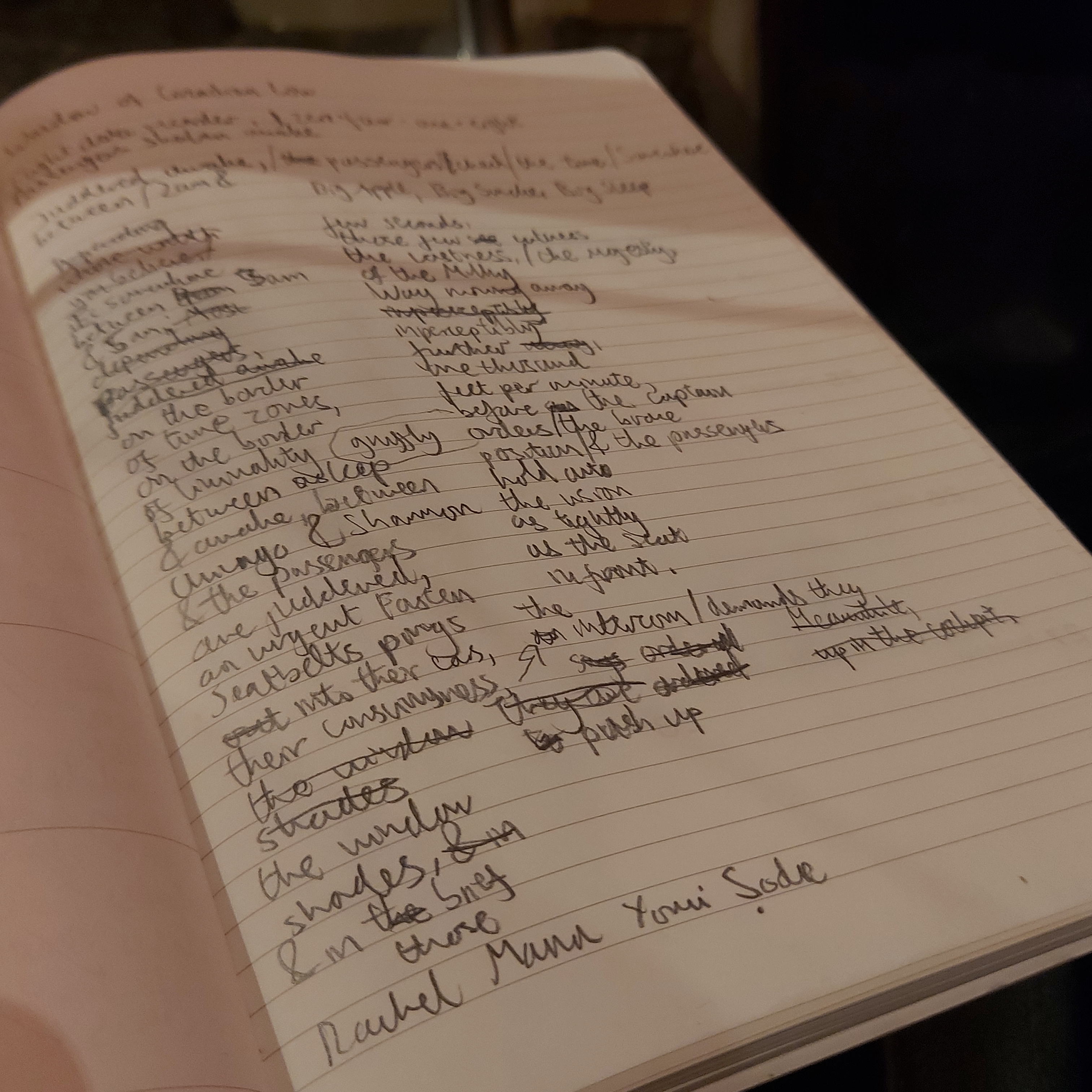
My advice for going to StAnza – and poetry events in general – is always to carry a notepad and pencil. I always find little nuggets of information that would otherwise be forgotten afterwards.

I’m glad I did because I was trying to compose a poem for my monthly Wyverns group using the prompt ‘Stars and planets’. I’d been turning over two ideas but they’d been coming out as short stories.

But as I listened to our guests Rachel Mann and Yomi Ṣode, it started to come together. It’s hard to quantify, but just being around other poets can help the process along. I was able to complete the piece that morning.

The following day, I typed up the piece and sent it to the group. The meeting had already taken place a week before it normally does because of a scheduling conflict, but I did received generally positive feedback by email.

I don’t yet know what my next festival will be, but I’m looking forward to finding out what’s on.

Doubt, and the Avoidance Thereof

There have been a few occasions recently where I’ve had to explain a complex idea in writing without the risk of being misunderstood. This is where my favourite clarifying phrase comes into play: For the avoidance of doubt.

The last time I deployed this phrase was yesternight in a business email. I’d previously asked one person to refer me to another, and then I’d changed my mind a couple of days later. However, the first person hadn’t received the revised message before the second person made contact.

I then replied to all parties explaining there had been a misunderstanding somewhere but – for the avoidance of doubt – it wasn’t a big deal.

It’s normally considered bad form to use the passive voice, but I find it an advantage here. The phrase doesn’t accuse the other person of communicating poorly, only that a mix-up has occurred somewhere.

Depending on how you normally speak, you might want to use different phrasing, but it’s a good template for ensuring all parties are on the same page.