Trying My Hand at a Chapbook

In the world of writing, there are all sorts of routes to publication for poetry and short stories, but they divide roughly into two main types.

The first is a competition format. This usually requires payment of an entry fee, which goes towards a cash prize for the winner – and sometimes runners-up – along with publication. I don’t normally enter these. Among other reasons, the cost is often excessive and the rules of entry tend to be complex and sometimes contradictory.

I much prefer the second format: an open call from a publisher. This is typically free and simple to enter, although the trade-off is a lesser payment, if any is offered at all. Here, the glory lies largely in publication and a contributor’s copy.

That said, the 2025 Rattle Chapbook Prize recently caught my attention. In this competition, the publisher wants poetry chapbook submissions of between 15 and 30 pages. Three winners, anonymously judged by the editors, will receive $5,000 and 500 copies of the book.

I’ve wanted to compile a collection for some time now, so this seemed the ideal opportunity. Additionally, unpublished individual poems from the manuscripts may also be offered standard publication in Rattle.

I’d already settled on a theme of self-confidence and romantic relationships, so I looked through the 200 folders in my poetry archive, hoping to find 12 suitable pieces. I found 11, and I wanted them to flow by mood, almost telling a story. Yet they wouldn’t fall into a suitable order no matter how they were arranged.

As the deadline was closing in, a solution eventually presented itself. I added a 12th poem that wasn’t on the same theme but could be read as such with some canny placement. I then wrote a 13th piece lifting some elements from that poem but taking them in a different direction, and these two act as bookends for the chapbook.

The other problem happened around the middle of the collection, where two poems with contrasting moods disrupted the flow. I separated them by writing a very short 14th piece, just two lines long, but it worked to calm the waters.

The winners will be announced in mid-April, so I’ll be sure not to submit the same poems anywhere else until then. In the likely event that my work isn’t accepted, I still have a chapbook to submit elsewhere or perhaps even to publish myself.
The Stories That Have Legs

Around this time last year, I intended to write a silly joke for Twitter. It was intended to read along the lines of ‘Does anyone remember before the Internet, you had to phone in your YouTube order and wait for the videos to be delivered?’

I never posted that joke because I kept thinking of details I wanted to add. at last count, that one-liner has gradually morphed into a short story of more than 1,800 words.

Now another piece is currently growing legs in a similar manner. My old school sports grounds are on a main road, so I often walk past them. This prompted a one-off story about a group of teenage school pupils who are required to take games class, but either loathe it or are at least indifferent about it, so they find other ways to keep themselves occupied during this time.

Unusually for me, I posted it to a popular writing website to see what the feedback would be like. Some commenters pointed out there was a potential cliffhanger, so I wrote a second part to fill that gap.

That second installment received as much attention as the first. By this time, the characters were so well-rounded that I could take them out of games class and into other locations, so a third part quickly followed.

In an effort to avoid confusion in the one-off story, I’d only named a handful of the 14 characters. This was fine for the sequel, which took place in the same location the following week. However, it had been established in the one-off that the summer break was nearly upon them. The narrator is shown to ask the named characters to meet up again during summer, but none of them were keen for their own reasons.

I therefore injected some retroactive continuity in an effort to avoid inconsistencies.

It would have been possible, but implausible, for all the named characters suddenly to change their minds about meeting up again. However, there were two unnamed characters mentioned en passant by the narrator. I pushed them centre-stage when said they had somewhere to meet over summer. This in turn persuaded the best friend of the narrator to change her mind and join them.

As such, the number of characters reduced to four, arguably a more manageable than 14. Introducing that new location then meant I was able to introduce other characters who weren’t necessarily required to have been in the previous installments.

The third part hasn’t made nearly as big a splash on the website as its two predecessors. I’ve nonetheless planned for a series of six or seven short stories because I really need to write this tale, almost regardless of the reaction.

I’m now considering releasing them as one collection, which will give me even more opportunity to make the continuity seamless rather than retrospective.

The milestones of a masterpiece.

When you’re in the middle of writing a novel or compiling a poetry collection or some other big project, it can be easy to forget the end goal. One way to maintain your momentum is to remind yourself what will or might happen when it’s completed.

Try creating something that represents your aim, like a mock cover for the finished volume. Or find a trophy, even if it’s made of cheap plastic, and label it something like [Your name] – Forward Prize – 2017. Or even write the speech you plan to give at your first launch.

Now leave the artefact in a place you’ll see it every day, and that’ll remind you what you’re working toward. It’s not simply words on a page, but something people will buy and possibly admire.

Think how you’ll feel when it really does happen.

The Paper Trilogy.

I intended to make only one entry on the theme of paper, which turned into a second post. This entry will be a short third and final update on this topic, as I just keep finding more material.

I’ve discovered more notebooks, including some early drafts from my second novel, and a review of Tron: Legacy for my old LiveJournal blog. Once again, I’ve never reached the last pages of these pads. I find this rather strange, as I’m not the sort of person to leave a job half-finished. Once, I would have preserved them as they were, but I’ll use the other pages in the future if I need to.

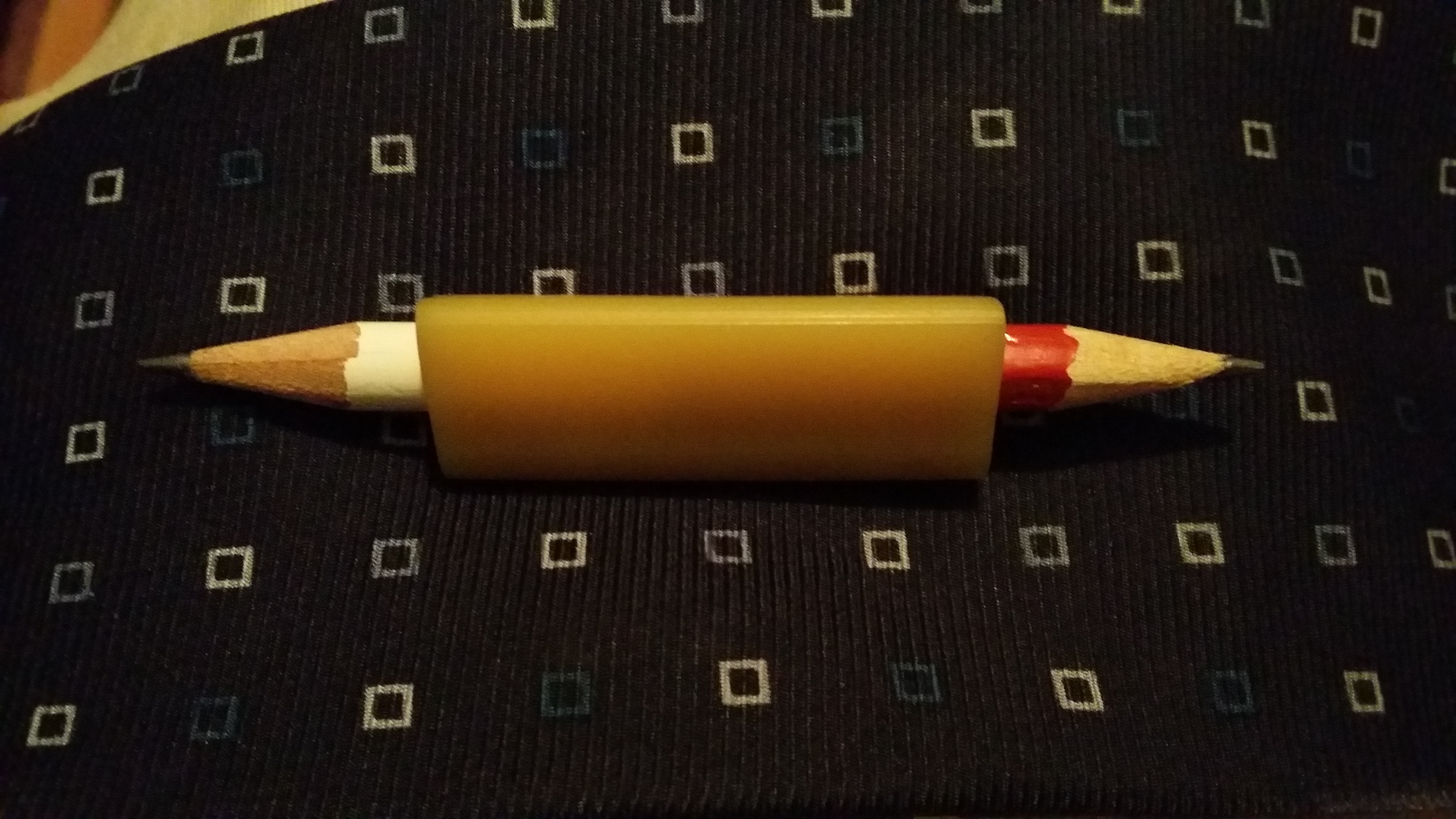
My pencils are a different story. I have dozens of them around the house, and I don’t like to waste them. In fact, here are my two smallest ones joined by a rubber grip. I’ll use them until I physically can’t hold them any more:

The world's smallest pencil

I’ve also discovered from Mental Floss that every new prime minister leaves a handwritten letter about what to do in the event of a nuclear conflict if both he and his assigned second-in-command are dead. It seems a little strange that such a format is still used. If I was PM, I’d make sure I spelled it out in 16-point Helvetica so the commanders aren’t standing around asking, “Does that say, ‘load weapons,’ or, ‘lower weapons?'”

More poignantly, ListVerse posted a collection of last words written by people facing certain death. Not all of them had the luxury of pen and paper, including the prisoner of war who scratched out a memorial on a rock, and a diver who wrote his on a slate.

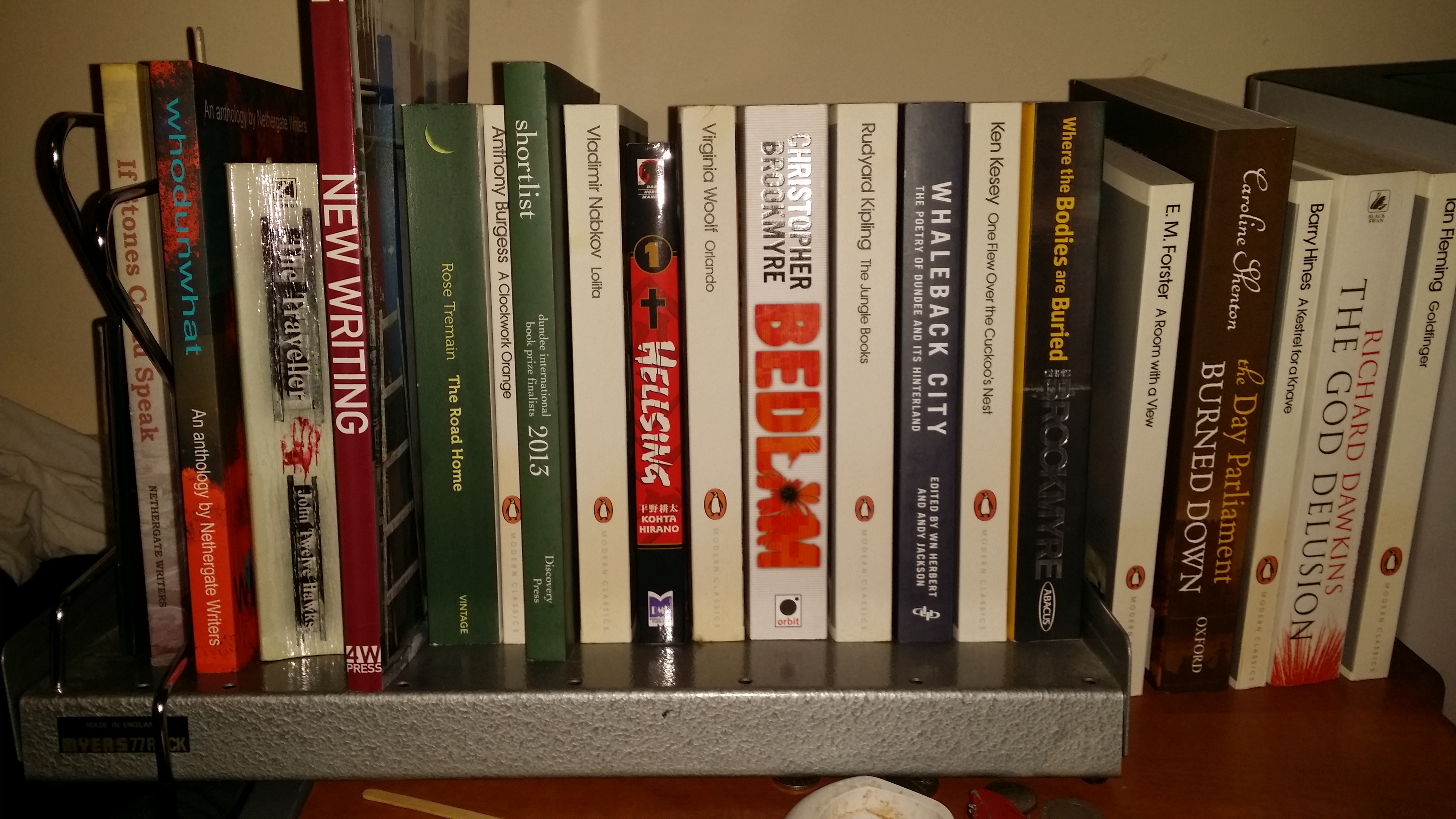
Lastly, I’d like to show you the paper books I plan to read throughout the rest of the year, including modern writers such as John Twelve Hawks and Richard Dawkins, a selection of Penguin Classics, and a number of local anthologies:

Paper books to read this yearIf you want more information on any of these, let me know.