Pencil, Paper and Privacy

I’m in a poetry circle called the Wyverns. Each month, we write a piece and share it with the rest of the group, inviting constructive feedback from the others.

This month, the prompt was Cartoon characters. With only four days until the next meeting and a hazy idea about what to write, I churned out a piece and an introduction directly into an email. After checking it over for any obvious errors, it was then sent to the other members.

When I told the group about how I’d composed the poem, it started off a discussion about the writing process, primarily whether we used paper to start, or entered it straight into a computer.

Typically, my pieces do start on paper. I make sure to buy a diary with plenty of note pages because these double as my notebook. It was a habit I developed a few years ago because I was typing all day at work, and it was a relief to pick up a pencil instead.

As I’m a touch-typist, writing by hand is considerably slower, but it can also allow more time to think about the text while composing. Paper also affords a less linear approach, freely allowing the addition of words with a carat mark or margin notes. A word processor, by contrast, typically likes to restrict the user to one line. There are odd exceptions like Microsoft OneNote, which can be used as a digital scrapbook.

I find writing by hand works best for prose and poetry. These blog entries are composed much more quickly, often in reaction to something that’s happened the same week, so these are entered straight into WordPress. I run a writing group every Tuesday and I often use that time to polish them off.

While we’re here, if you do a lot of writing on a computer in a public place, my advice is to buy a privacy screen immediately.

You can see the image straight on, or slightly to the left or right, while anyone looking at too steep an angle won’t be able to make anything out. Mine attaches with unobtrusive clear pads and stays permanently in place, but some other designs are removable.
Discussion Questions About Discussion Questions

On Sunday evening, I reached the end of the Richard Osman novel The Man Who Died Twice. I always like to read over the acknowledgements, and then I turned the page to find a section titled ‘Discussion Questions for Readers’.

Most of the questions give away plot points, so I won’t repeat those here, but there are a few only tangentially related to the story, such as ‘Have you ever been lonely in a new town?’ and ‘What is an acceptable name for a pet, and what is unacceptable?’

I’d never before seen this feature in a novel, so I asked around to see whether others had. While some pals were – like me – surprised to see this outside of an educational setting, others reported discussion questions appearing in other books, such as:

  • A Man Called Ove by Fredrik Backman
  • The Seven Husbands of Evelyn Hugo and Daisy Jones and the Six, both by Taylor Jenkins Reid

These titles were all published in or after 2012, and I’d be interested to find out whether any older novels also have this feature.

One respondent reported debating with herself whether such questions encourage critical thinking or are merely there to spoon-feed reading groups. I’ve considered this question myself, but I have no conclusions so far.

It’s not clear whether the discussion section was the initiative of the author or the publisher, but I expect you’d want to test the waters first. My edition boasts ‘The multi-million-copy bestseller’ on the cover, so I expect Penguin Random House knew by this point that its readers would want to discuss the title.

Although I really enjoyed The Man Who Died Twice, perhaps I haven’t seen a discussion section before because I simply don’t normally lean towards crime fiction, cosy or otherwise. However, I will keep an eye out for this in the future.

CSI for CSS

Until September of last year, my open-mic event would circulate bulletins using a manually-maintained Gmail list. This is not designed to send 50-plus messages at once and the system eventually refused to send certain ones. So it was time to set up a more modern self-service system, and here’s the entry about what happened at the time.

For GDPR compliance, we also needed to set up a basic website to allow members to join and leave. Our Web server would then deal with the request automatically. I found an open-source template online and stripped it down to suit our needs. Everything else on the website was initially a secondary concern, but we’ve slowly expanded the content to include event times, standards of behaviour and the latest bulletin.

While running a link check, I spotted six broken ones. They weren’t important, merely referring to fonts that weren’t in use on the site, but I wanted to understand the errors and fix them.

It transpired that our site was referencing two separate Cascading Style Sheet (CSS) documents. These are used to define the visual appearance and layout of a Web page, including the colours, fonts, spacing and positioning of elements. Worse, the two documents contained some contradictory information, so the functionality of the website could change or break depending on the order in which the instructions were executed.

Combined with a little sloppy HTML syntax, the browser was doing some heavy lifting to correct the errors silently behind the scenes. Remembering the experience of the distribution list, I didn’t want this to collapse as well.

I used to be a lot more interested in computing than I am now, so much of my coding knowledge has left me. But I spent the weekend combining the two sheets and figuring out what could and should be removed. I relied heavily on user questions from Stack Overflow, the output from code validation websites and even ChatGPT to write snippets of code or check what I’d written.

Ultimately, a total of 7,800 lines of CSS code were reduced to less than 160 lines by Sunday night. The resulting Hotchpotch website is still incredibly static and basic, but it fits the bill precisely.

I then had the impetus to revamp an existing website for a small writing class I’ve been running. This time, I used authoring software for the general look and feel, then made small revisions to the code by hand with my newfound knowledge. The Placing Your Mark website is much more dynamic than its Hotchpotch cousin, although I might one day harmonise their respective designs.

Meanwhile, with the bank holiday weekend over, I’m excited to get back to writing words and sentences rather than syntax and semicolons.

Four, But Not of a Kind

I’m a member of at least four literary groups. I would normally have perhaps two in one week, or have to miss one because another takes precedence. But in a rare alignment last week, they occurred in sequence from Monday to Thursday.

On the surface, it might seem unnecessary to be in so many groups, but each one has its own distinct character and role. I also run the first two groups, while the other two are held by others. Here’s a brief rundown of what happens.


Monday: Hotchpotch

Of all my groups, this is probably the one I talk about most as it’s open to the public, while the rest have a semi-closed membership. Once a month on a Monday, we provide a space for writers to showcase their work in an open-mike format. There’s a strong ethos of no judgement and no criticism, so members are never given a hard time even if they make a mistake or if their work is rather political.

Tuesday: National Novel Writing Month

Although National Novel Writing Month officially only takes place during November, our region has continued to meet up in a pub every week for the past three or four years. We work on our own projects and have a lot of banter, although it’s not specifically for feedback. We’re gearing up for November by providing extra meet-ups and more encouragement for participants.

Wednesday: Table 23

Table 23 is an offshoot of our Tuesday meetings, named after the table we normally monopolise. These are held roughly every month at a member’s house. Unlike Tuesdays, each of us talk through our current writing project and ask for feedback about how it might be improved or about how to solve a particular plot problem.

Thursday: Wyverns

Wyverns is a group exclusively for poetry, formed when the local university stopped providing a suitable evening class. The members write a poem to a theme each month, and it receives constructive feedback from the others. We’re also working on our second pamphlet; our first was about Frankenstein, while this one is themed around the River Tay.


It can be hectic keeping up with all these groups, but it’s so rewarding to have this support from other writers that it’s definitely worth the effort.

Crossed Wires

Last week, I made a fool of myself in front of 150 e-mail recipients. I was sending out details of the next meeting of Hotchpotch, an open-mike night for writers. I normally update the previous e-mail with the latest details, but I’d forgotten to change the subject line. I therefore followed it up with a correction.

The most annoying part of this affair is that I use a Gmail extension to cancel the sending of an e-mail as long as I hit Undo within 30 seconds. However, it has encouraged me to become more vigilant with future updates. Aside from this incident, here are some of the lessons I’ve learned when communicating with writing group members.

E-mail

It’s important to exercise privacy when using e-mail. The addresses of the recipients should be typed in the Bcc box, not To or Cc, so each member will only see their own address on receipt. It’s worthwhile including your own e-mail address on the distribution list to check whether it’s formatted in the same way you intended.

Recipients should also be given the option to unsubscribe from updates. Whenever a Hotchpotch e-mail is sent, there is a signature at the bottom telling people to let us know if they want to unsubscribe.

The other mailing list I maintain is for the Dundee & Angus region of National Novel Writing Month (NaNoWriMo). This is done differently, as e-mails are composed using their website and the Unsubscribe function is added automatically before the message enters members’ inboxes.

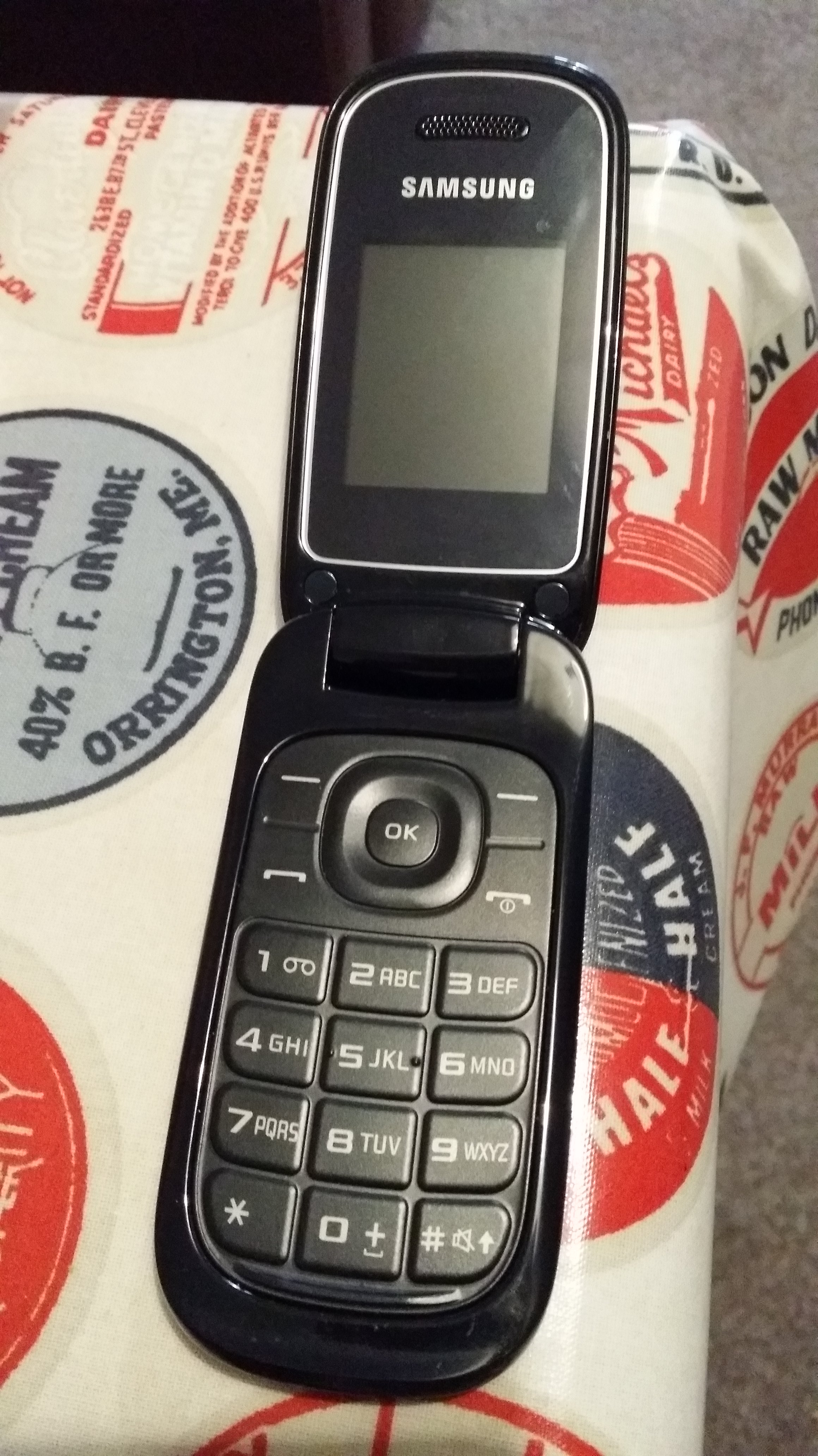
This is my NaNoWriMo phone

Facebook

Whenever Hotchpotch and NaNoWriMo e-mails are sent, their respective Facebook pages are updated at the same time with the same information to reach as many people as possible. The Hotchpotch page is open to the public since anyone can come along, whereas the NaNoWriMo page has its access restricted to members only.

One great advantage of the Facebook page for Hotchpotch is that we can tag and promote other events, which notifies that page owner, who can then share our event with their audience. I also share our updates on two other arts pages.

Other methods

Hotchpotch has an active Twitter account. Whenever an e-mail is sent, the date and time are given, followed by a link to the Facebook post. Our updates are occasionally shared by others, while prospective attendees can ask us questions.

Although NaNoWriMo itself has a Twitter presence, our region does not; again, this is because our bulletins are open only to members. However, I do carry a cheap phone with a budget SIM card if our members need to speak to us urgently. In practice, the only time I’ve needed it so far is when the battery on my own phone ran flat.

Frequency of updates

It’s a good idea not to fill people’s inboxes with the same message every day. In my experience, people who are overloaded will permanently unsubscribe or unfollow. It’s different, of course, if the recipient has signed up a daily writing prompt or suchlike.

For NaNoWriMo, once a week is the usual pattern, reflecting our weekly meetings. The next monthly Hotchpotch meeting is usually announced a few days after the previous one, with a reminder around two weeks later. And next time I send one, I’ll be double-checking that subject line.